Slides & transcript
Did you accept the risk? Dynamic risk metrics in your environment.
Slide 1
Did you accept the risk? Dynamic risk metrics in your environment. SnykCon 2020
Slide 2
a.k.a. The Safety Dance You can dance if you want to—but you can’t leave risk behind. SnykCon 2020
Slide 3
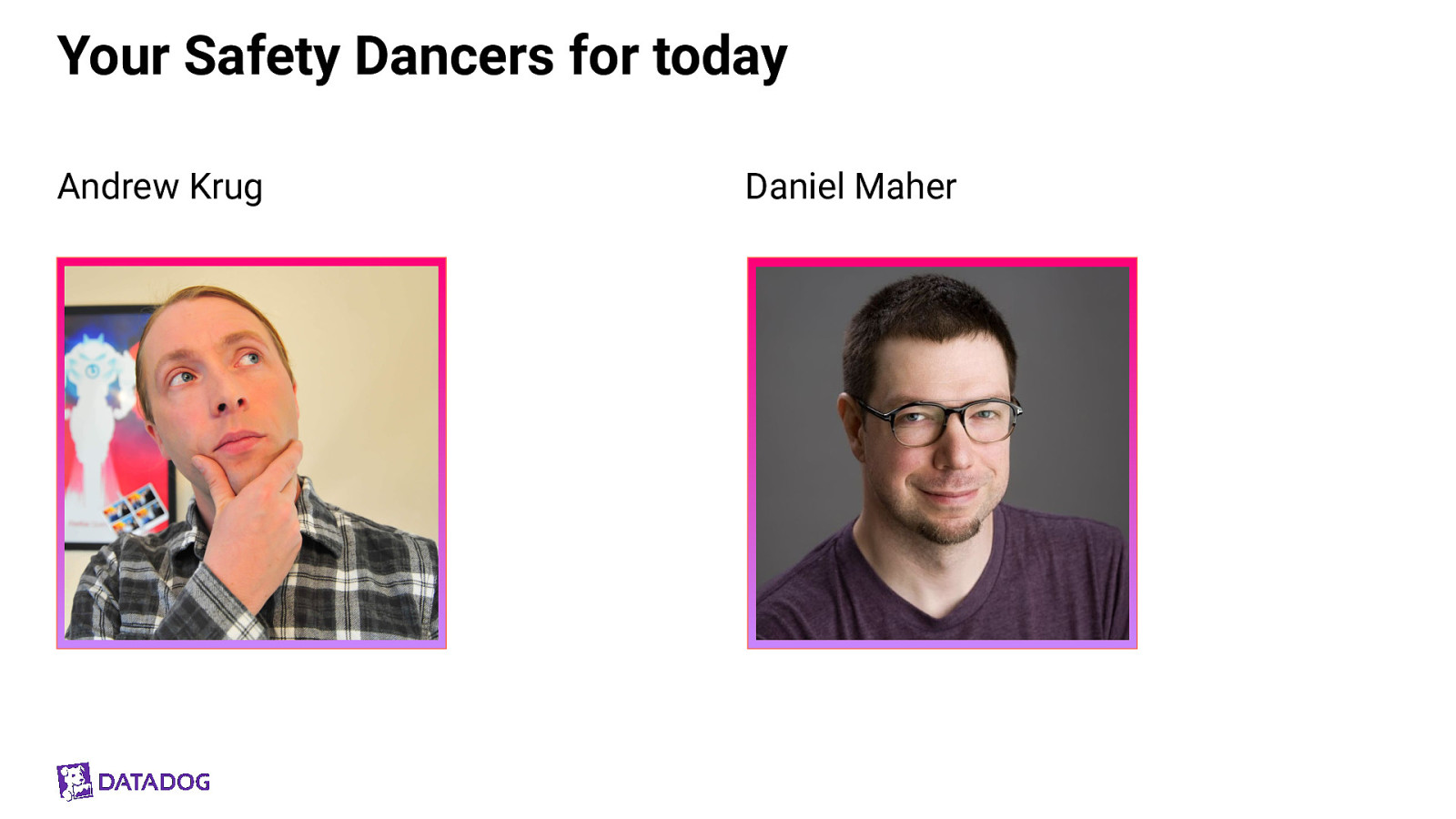
Your Safety Dancers for today Andrew Krug Daniel Maher
Slide 4
The dance card – Risk management (a classic!) – Real-world risk analysis (explosions!) – Risk in the context information technology (cyber!) – Virtual-world risk analysis (routing tables!) – How to shift-left to avoid specific risks ( !) – Walk through a sample application (dance party!)
Slide 5
Crash Course in Risk Risk 101
Slide 6
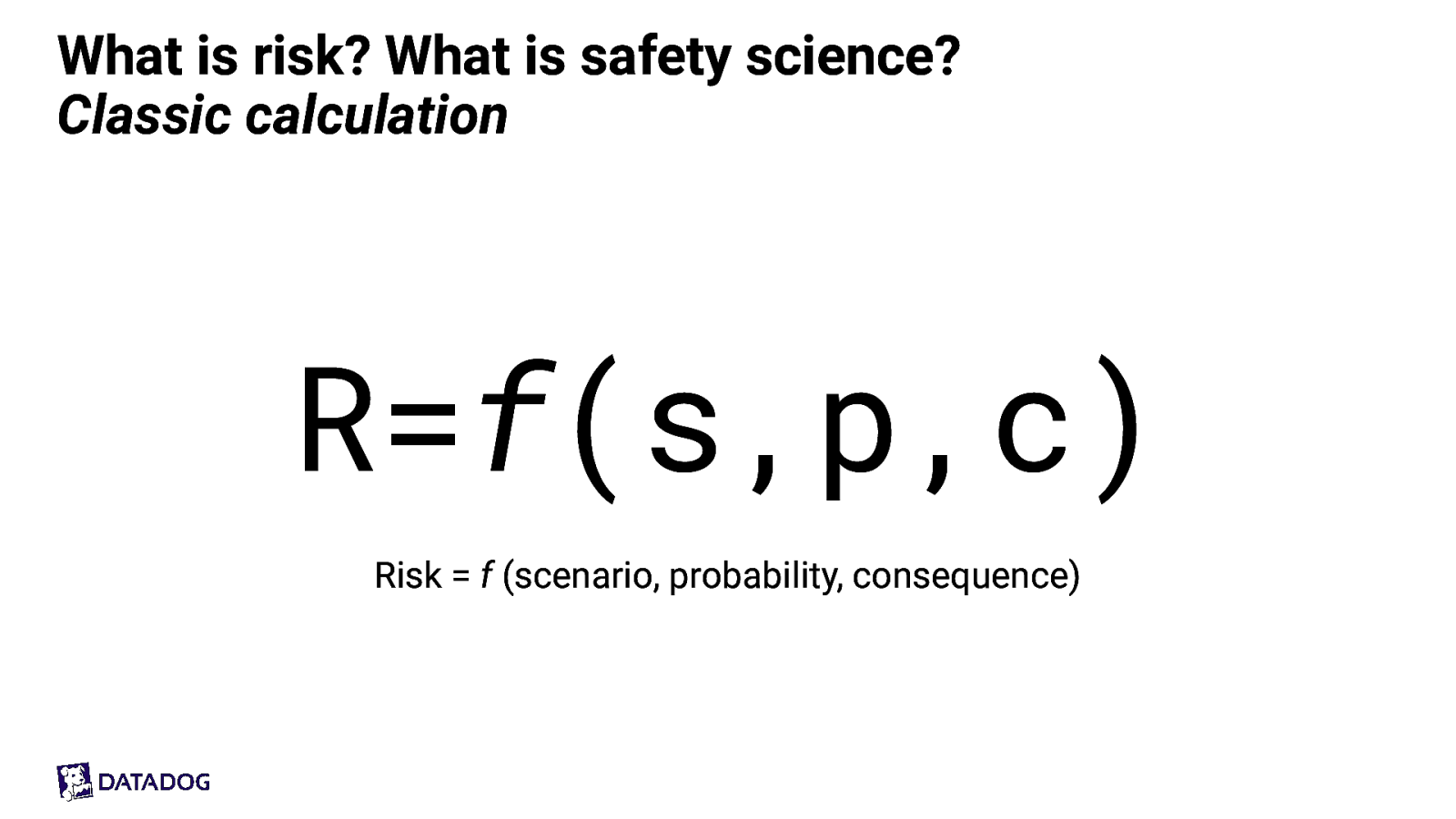
What is risk? What is safety science? Classic calculation R=f(s,p,c) Risk = f (scenario, probability, consequence)
Slide 7
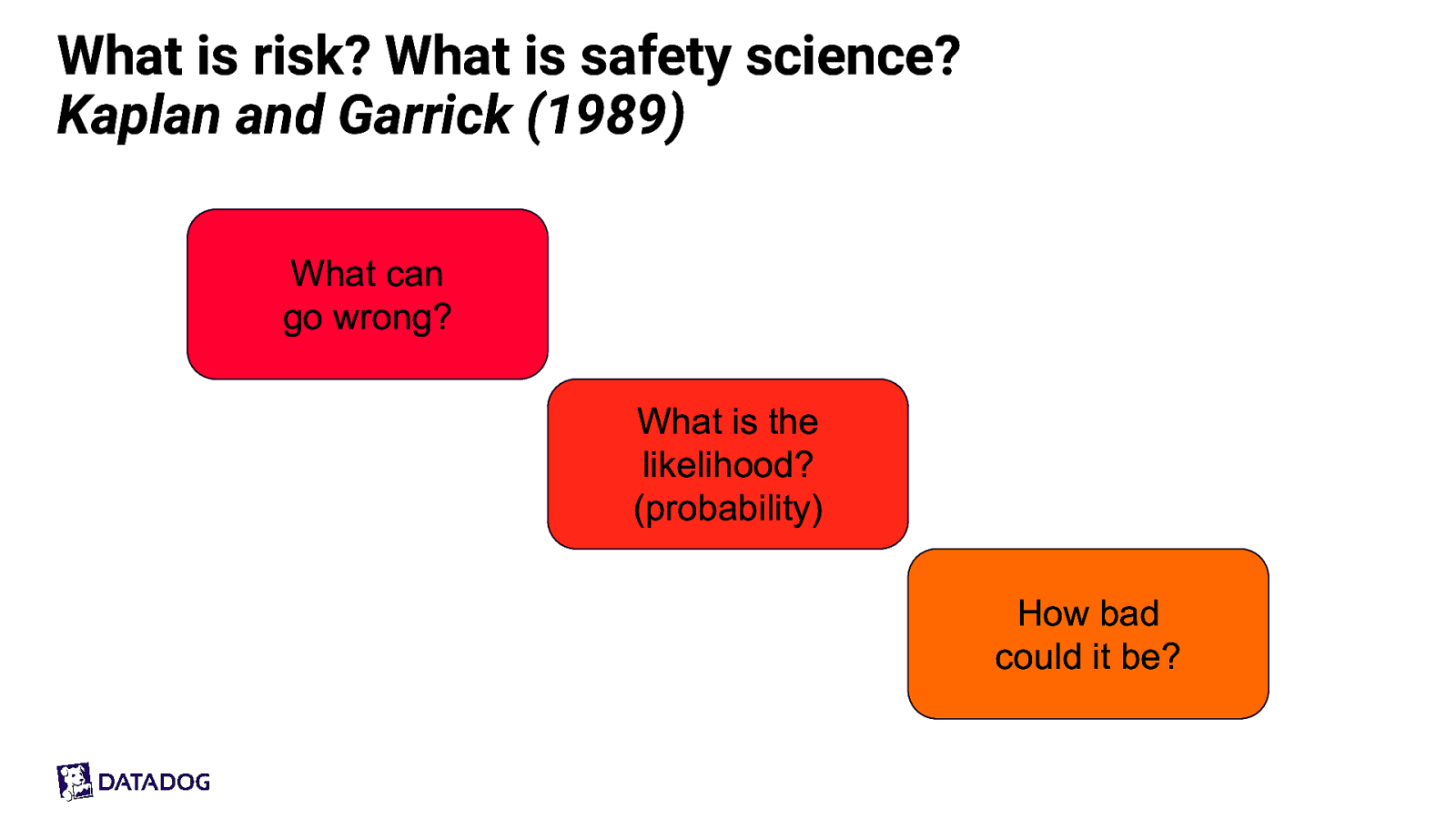
What is risk? What is safety science? Kaplan and Garrick (1989) What can go wrong? What is the likelihood? (probability) How bad could it be?
Slide 8
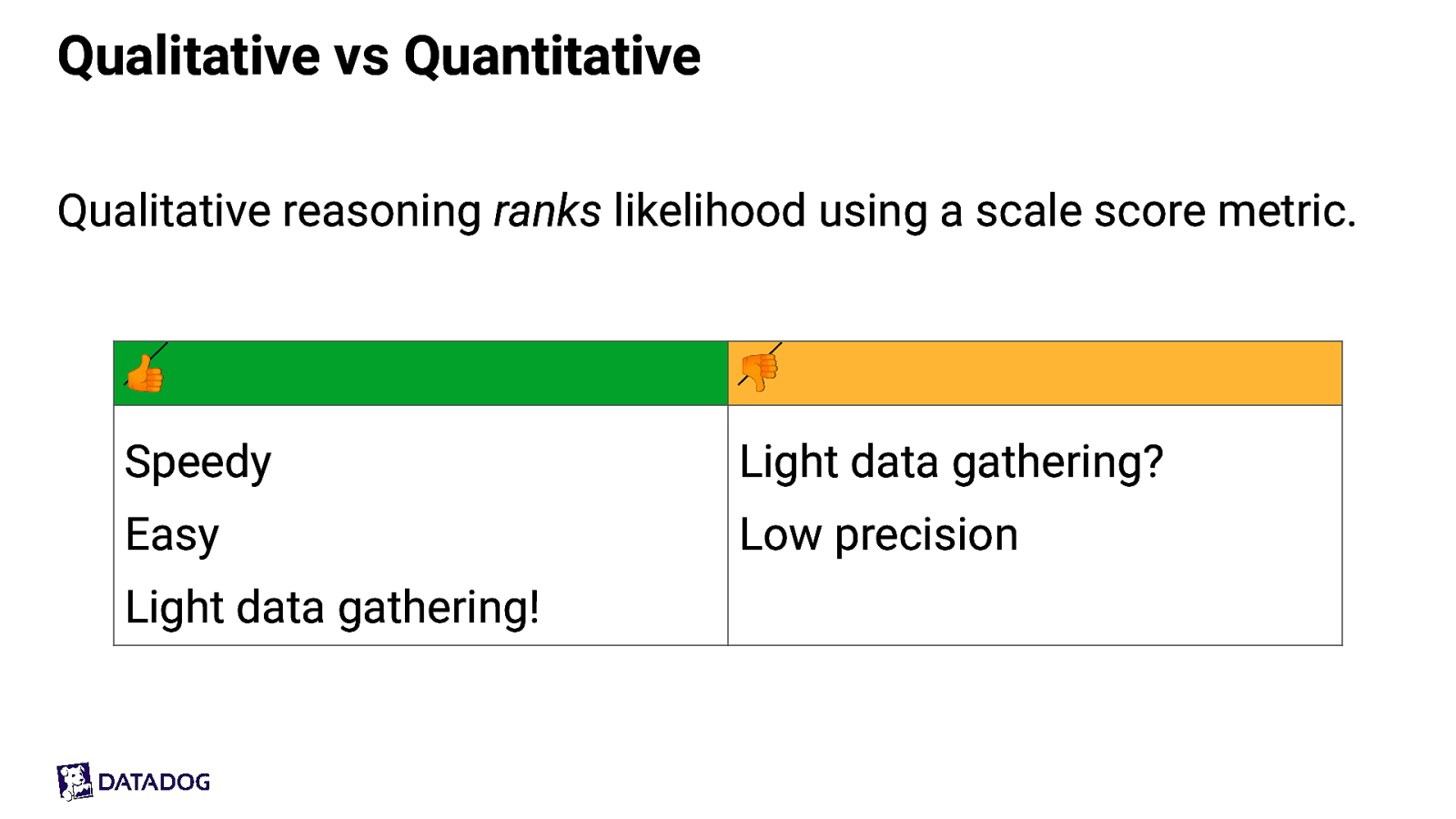
Qualitative vs Quantitative Qualitative reasoning ranks likelihood using a scale score metric. 👍 👎 Speedy Light data gathering? Easy Low precision Light data gathering!
Slide 9
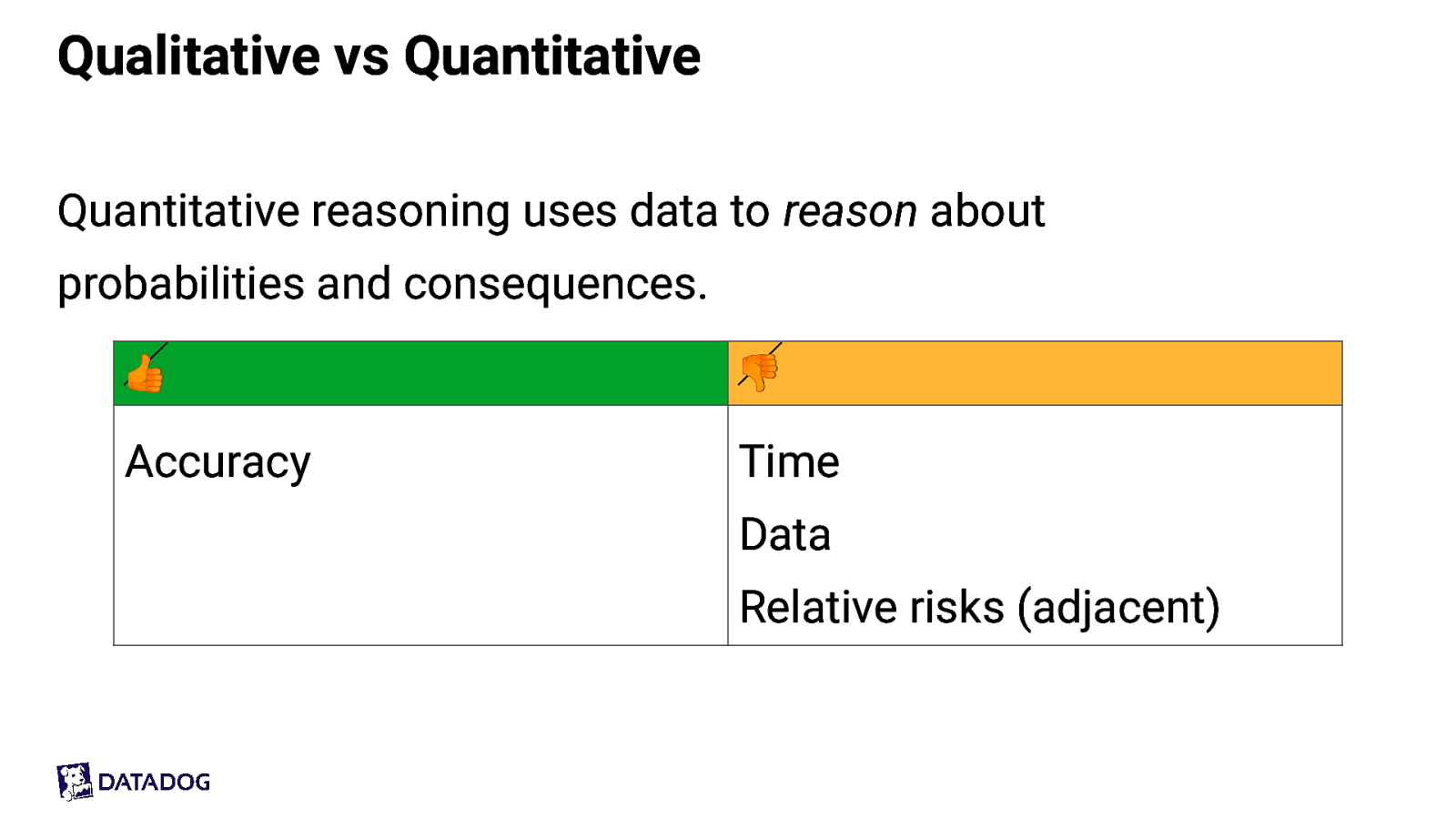
Qualitative vs Quantitative Quantitative reasoning uses data to reason about probabilities and consequences. 👍 👎 Accuracy Time Data Relative risks (adjacent)
Slide 10
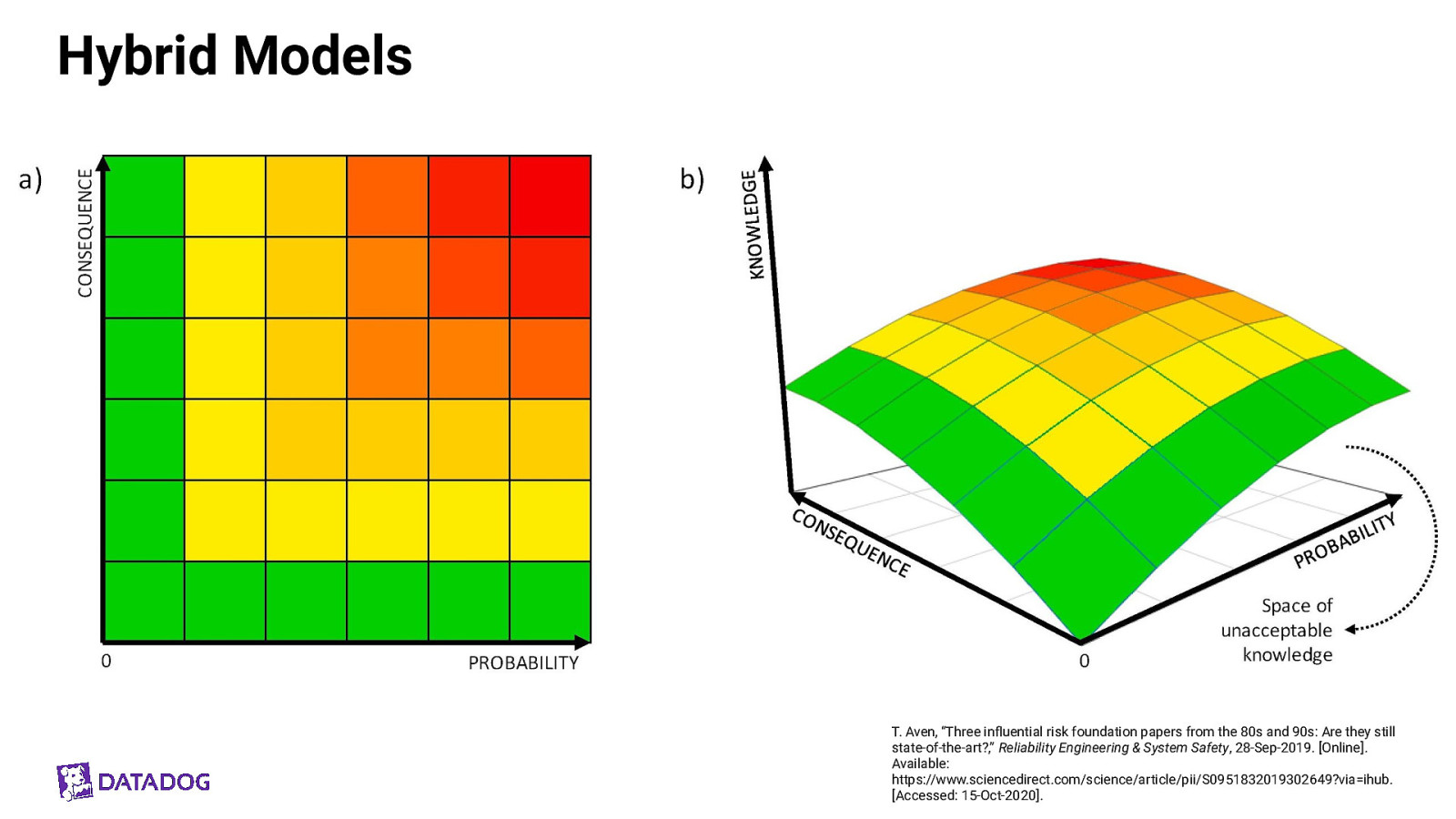
Hybrid Models T. Aven, “Three influential risk foundation papers from the 80s and 90s: Are they still state-of-the-art?,” Reliability Engineering & System Safety, 28-Sep-2019. [Online]. Available: https://www.sciencedirect.com/science/article/pii/S0951832019302649?via=ihub. [Accessed: 15-Oct-2020].
Slide 11
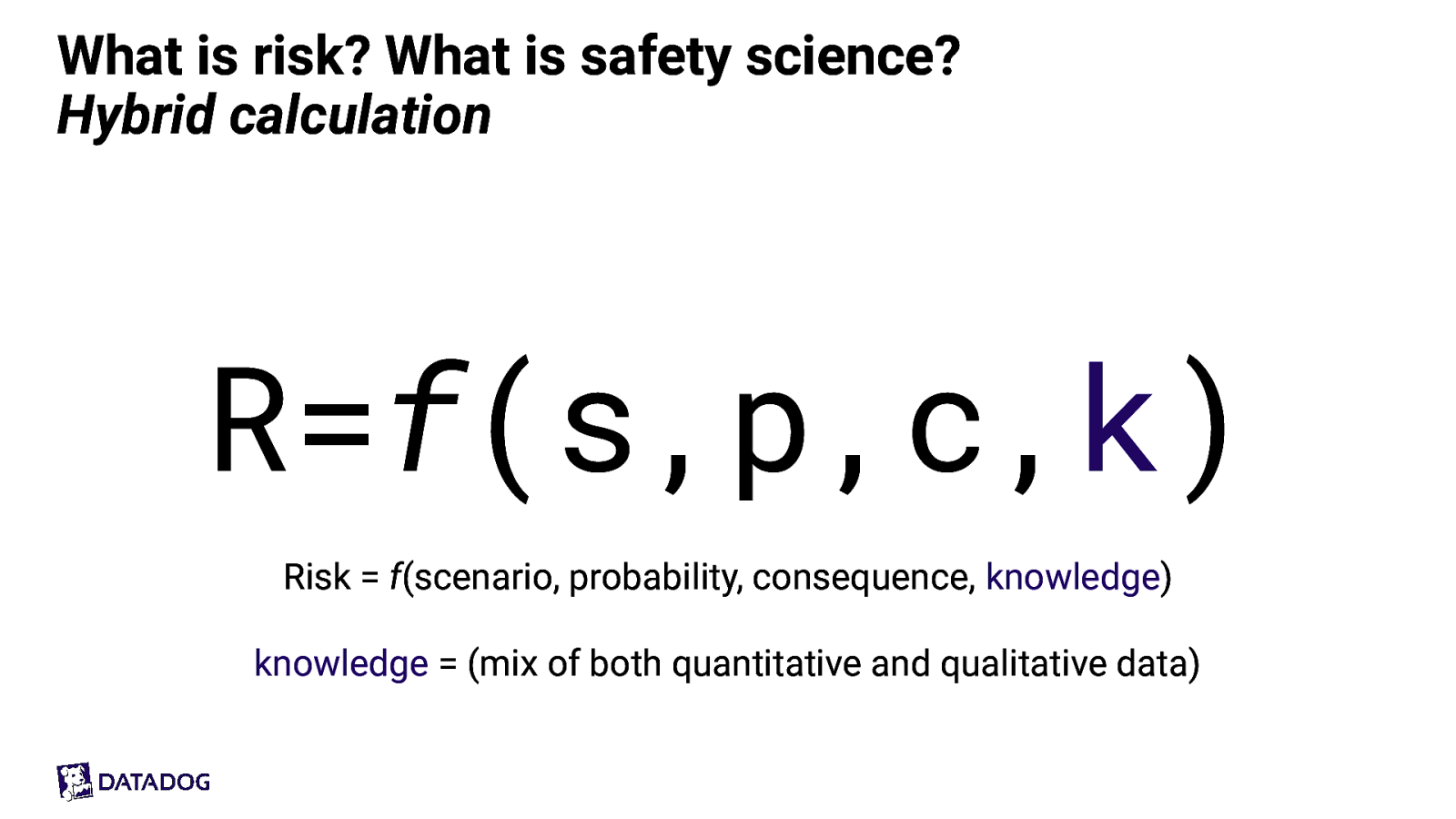
What is risk? What is safety science? Hybrid calculation R=f(s,p,c,k) Risk = f(scenario, probability, consequence, knowledge) knowledge = (mix of both quantitative and qualitative data)
Slide 12
Risk analysis in the real world
Slide 13
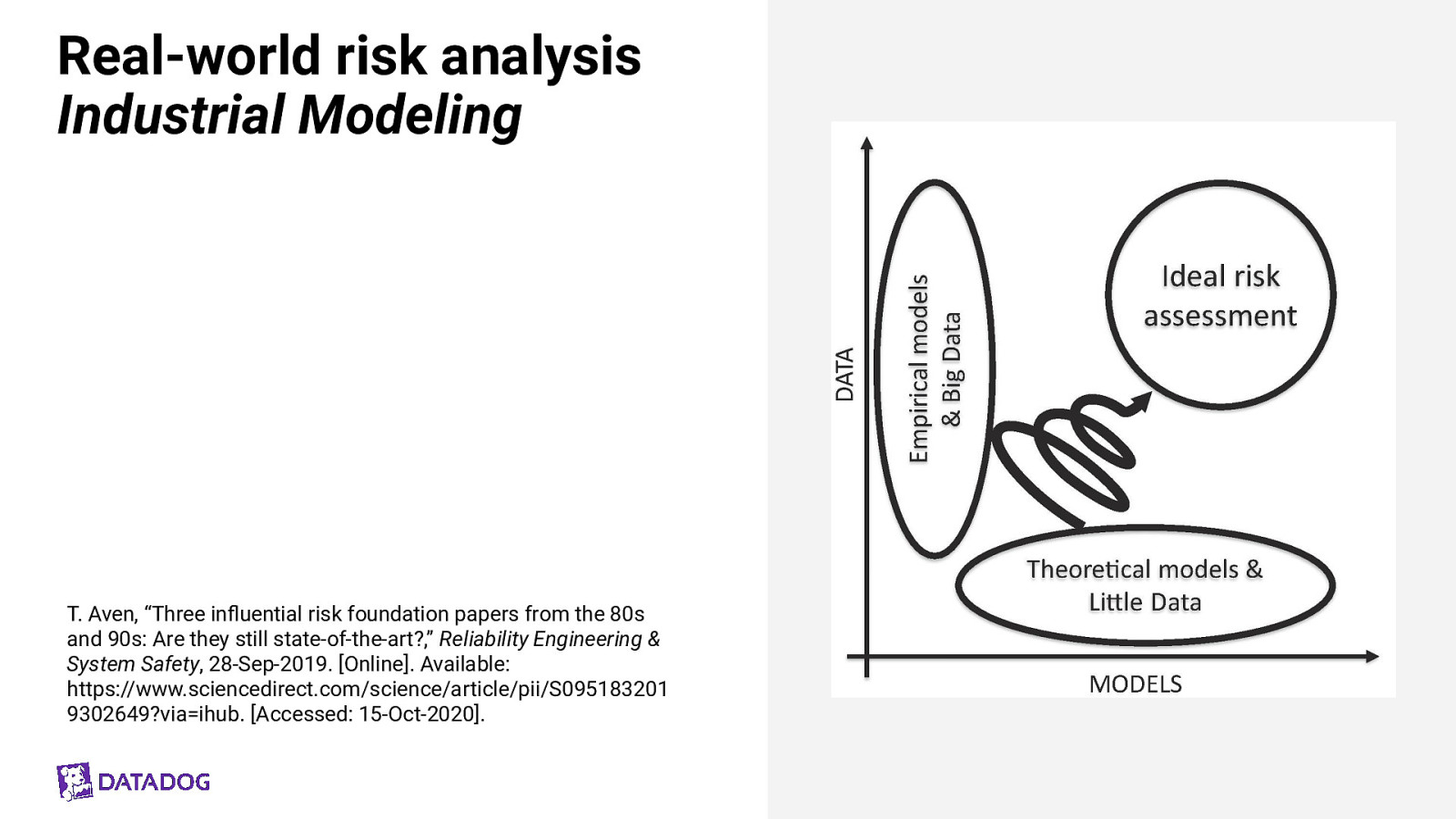
Real-world risk analysis Industrial Modeling T. Aven, “Three influential risk foundation papers from the 80s and 90s: Are they still state-of-the-art?,” Reliability Engineering & System Safety, 28-Sep-2019. [Online]. Available: https://www.sciencedirect.com/science/article/pii/S095183201 9302649?via=ihub. [Accessed: 15-Oct-2020].
Slide 14
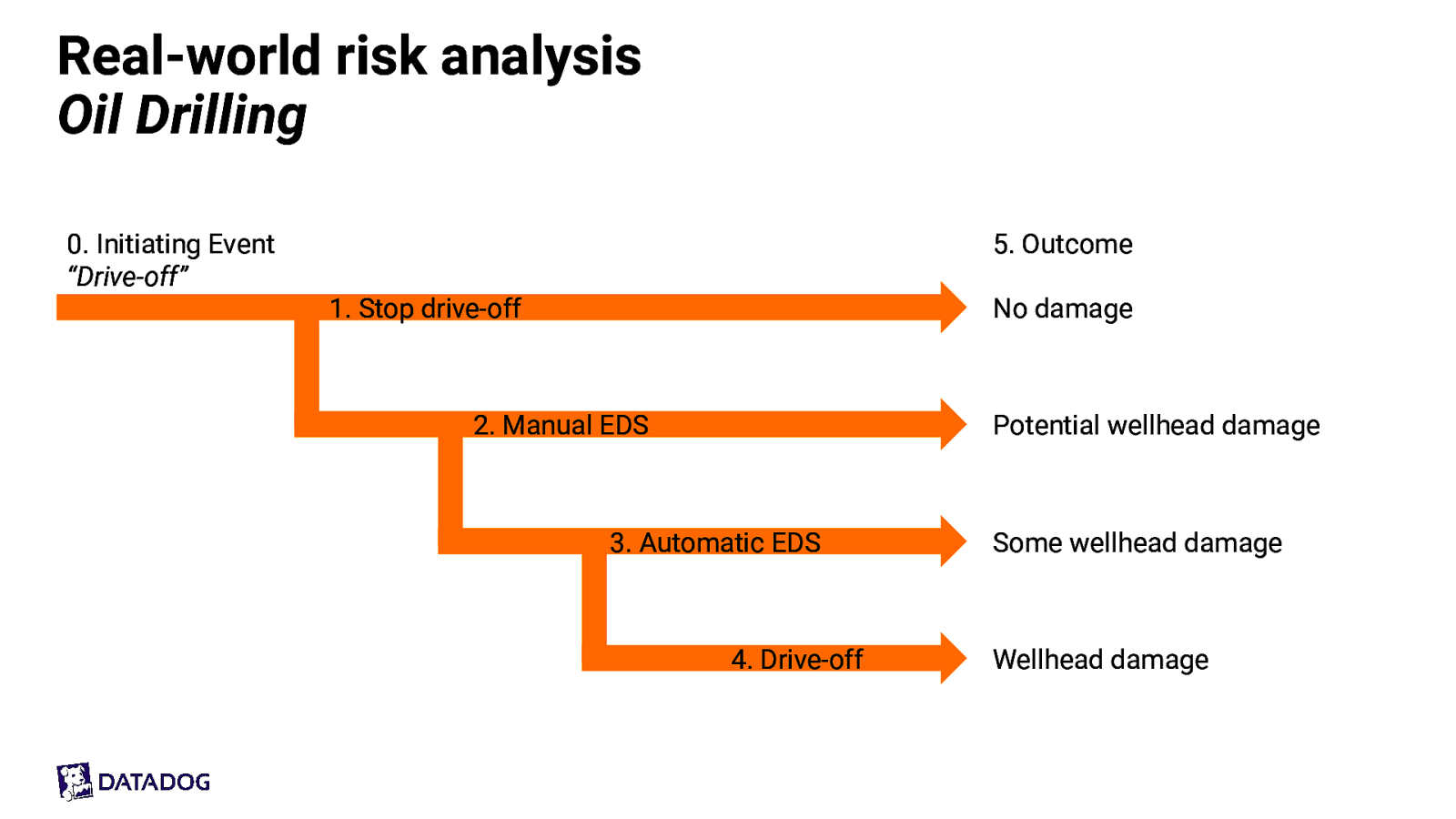
Real-world risk analysis Oil Drilling 0. Initiating Event “Drive-off” 5. Outcome 1. Stop drive-off No damage 2. Manual EDS Potential wellhead damage 3. Automatic EDS 4. Drive-off Some wellhead damage Wellhead damage
Slide 15
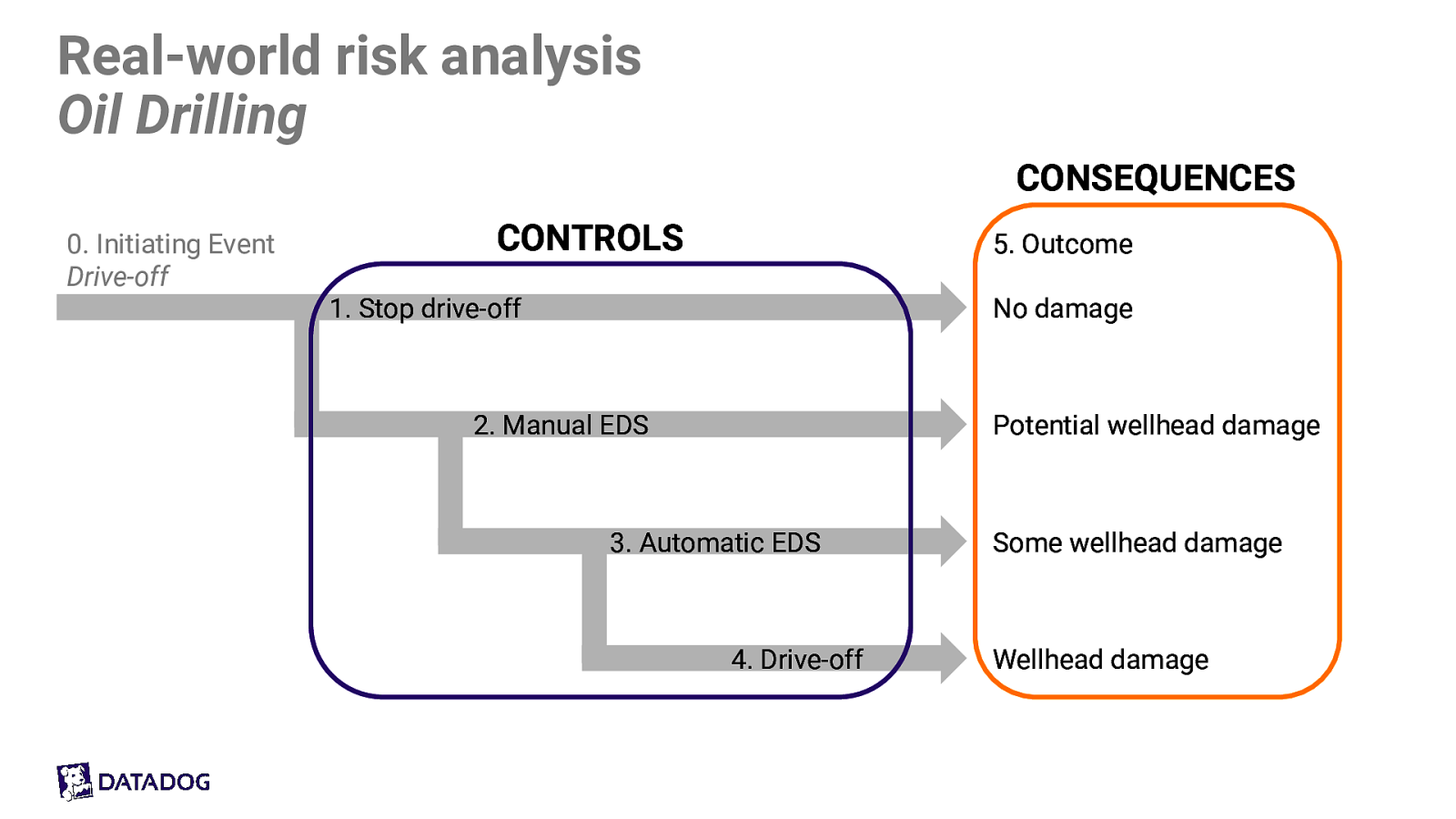
Real-world risk analysis Oil Drilling CONSEQUENCES 0. Initiating Event Drive-off CONTROLS 5. Outcome Stop drive-off No damage Manual EDS Potential wellhead damage Automatic EDS Drive-off Some wellhead damage Wellhead damage
Slide 16
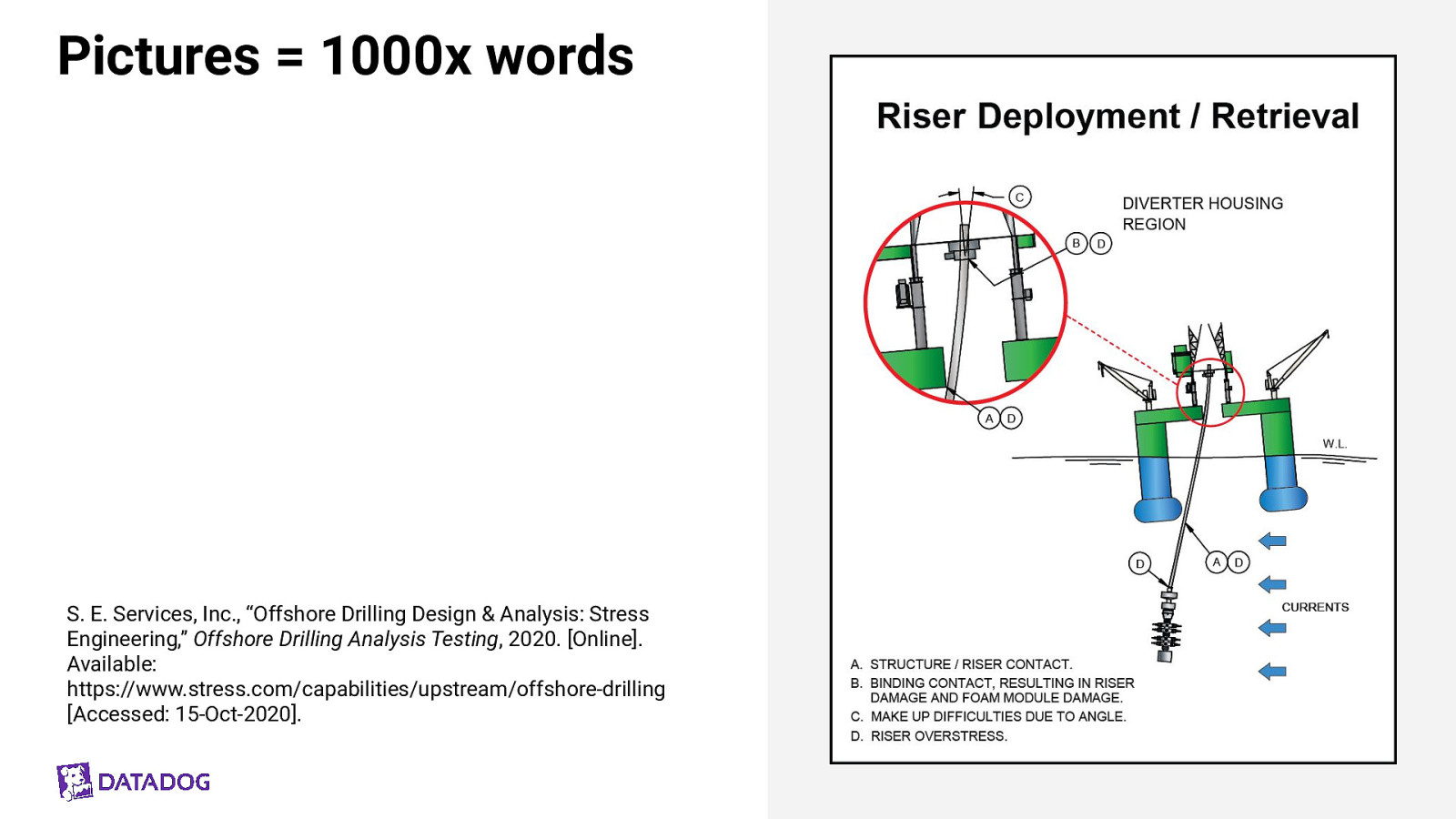
Pictures = 1000x words S. E. Services, Inc., “Offshore Drilling Design & Analysis: Stress Engineering,” Offshore Drilling Analysis Testing, 2020. [Online]. Available: https://www.stress.com/capabilities/upstream/offshore-drilling [Accessed: 15-Oct-2020].
Slide 17
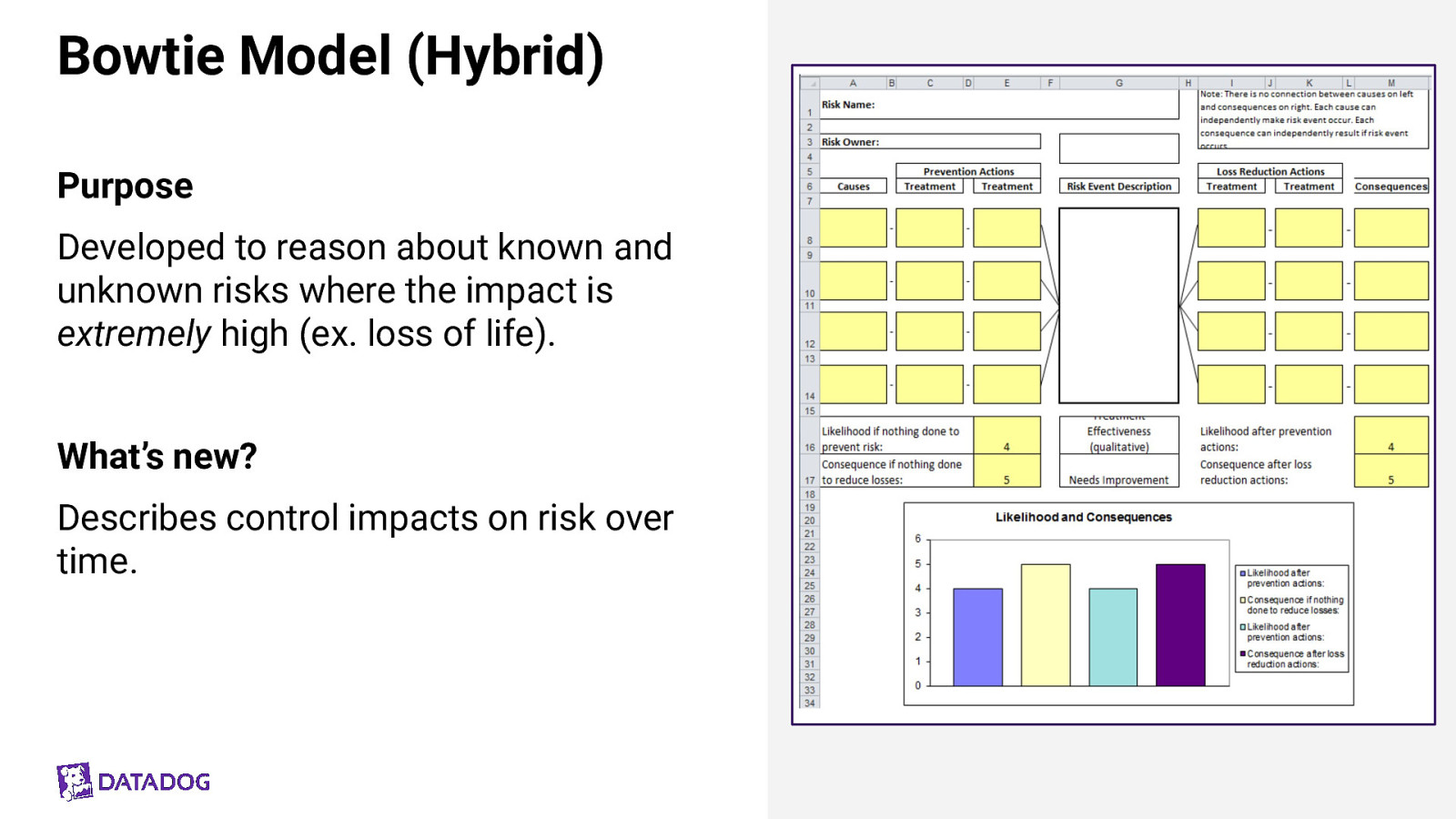
Bowtie Model (Hybrid) Purpose Developed to reason about known and unknown risks where the impact is extremely high (ex. loss of life). What’s new? Describes control impacts on risk over time.
Slide 18
Risk in operations, development, and cyber security
Slide 19
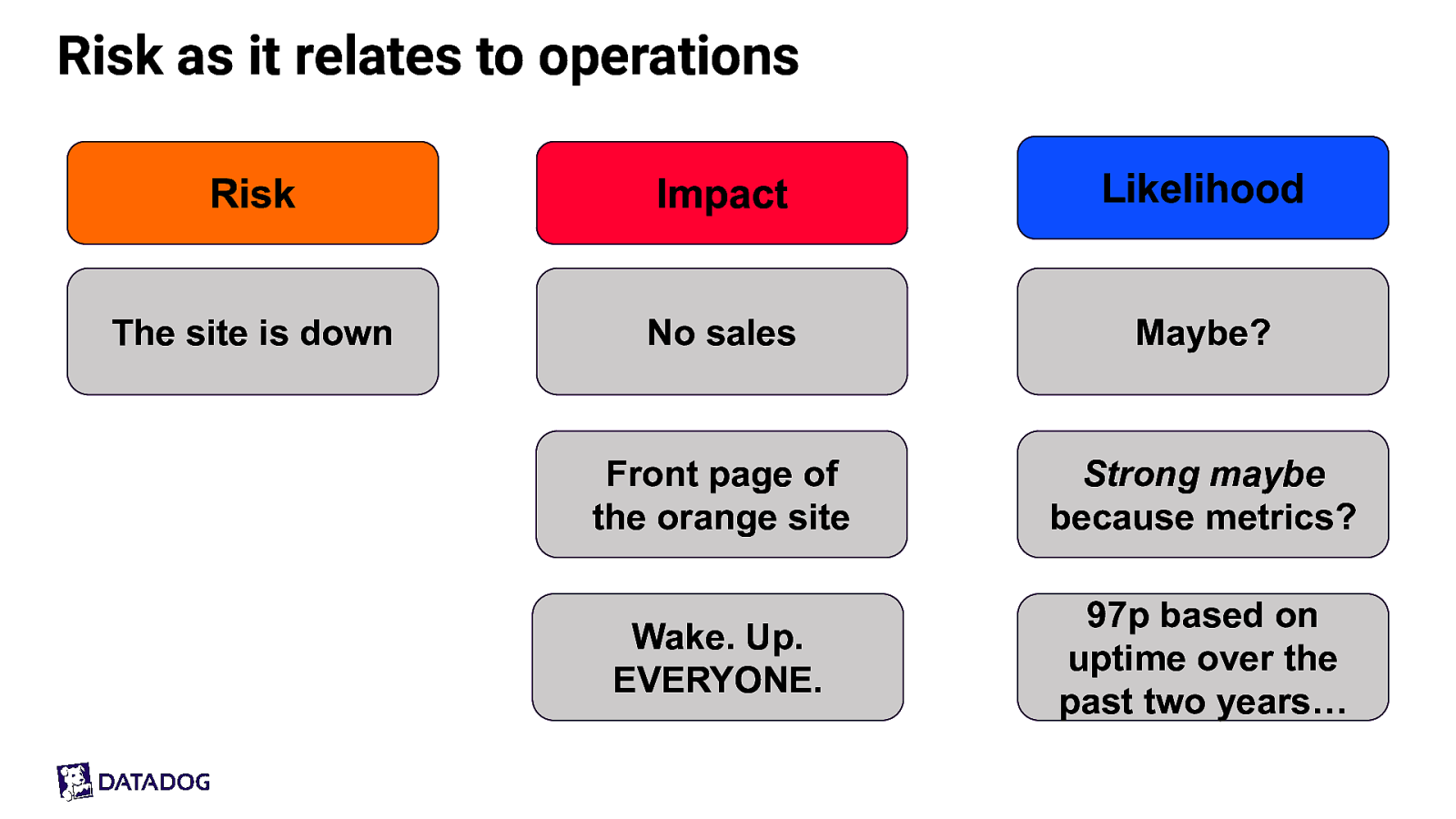
Risk as it relates to operations Risk Impact Likelihood The site is down No sales Maybe? Front page of the orange site Strong maybe because metrics? Wake. Up. EVERYONE. 97p based on uptime over the past two years…
Slide 20
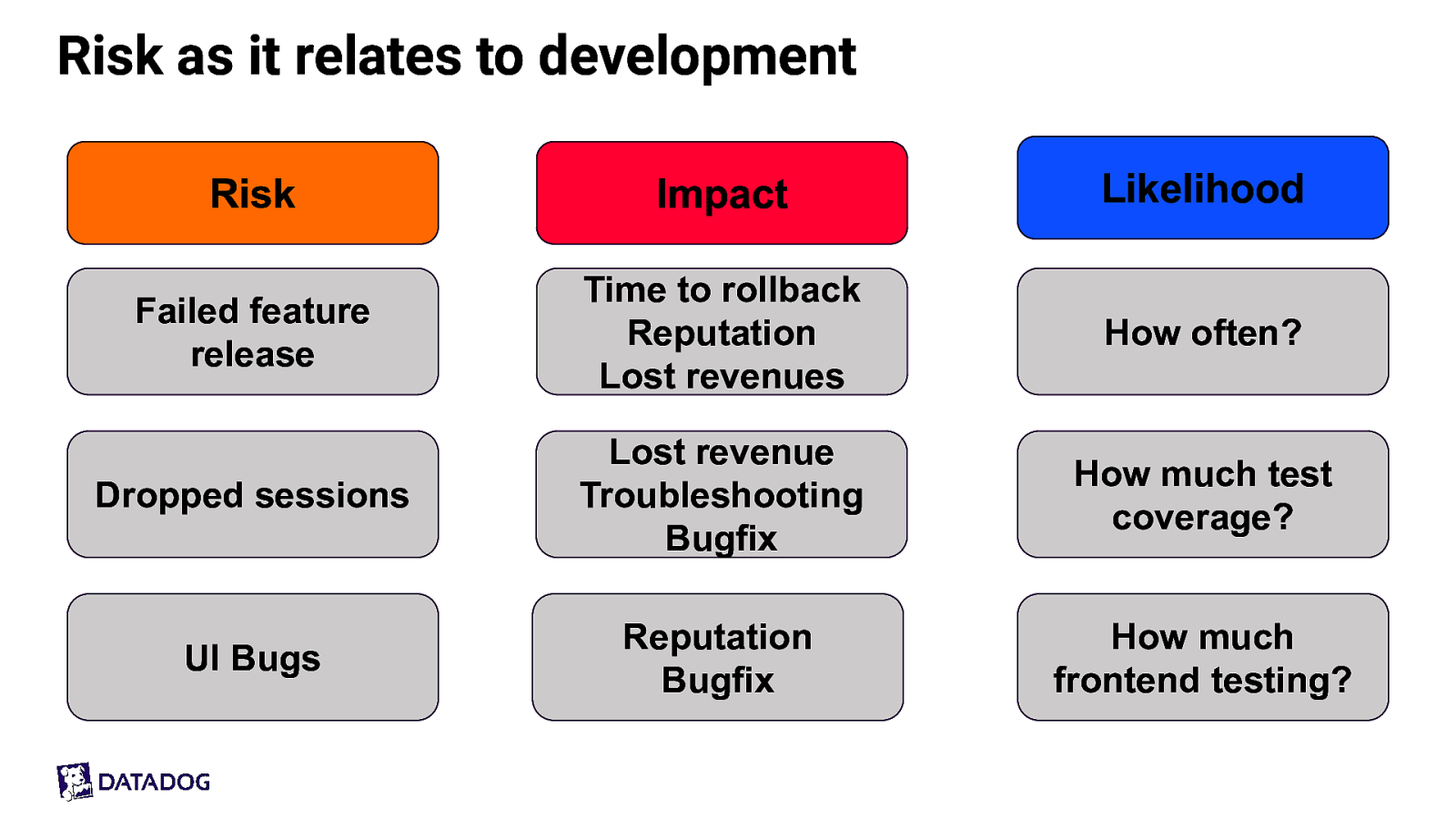
Risk as it relates to development Risk Impact Likelihood Failed feature release Time to rollback Reputation Lost revenues How often? Dropped sessions Lost revenue Troubleshooting Bugfix How much test coverage? UI Bugs Reputation Bugfix How much frontend testing?
Slide 21
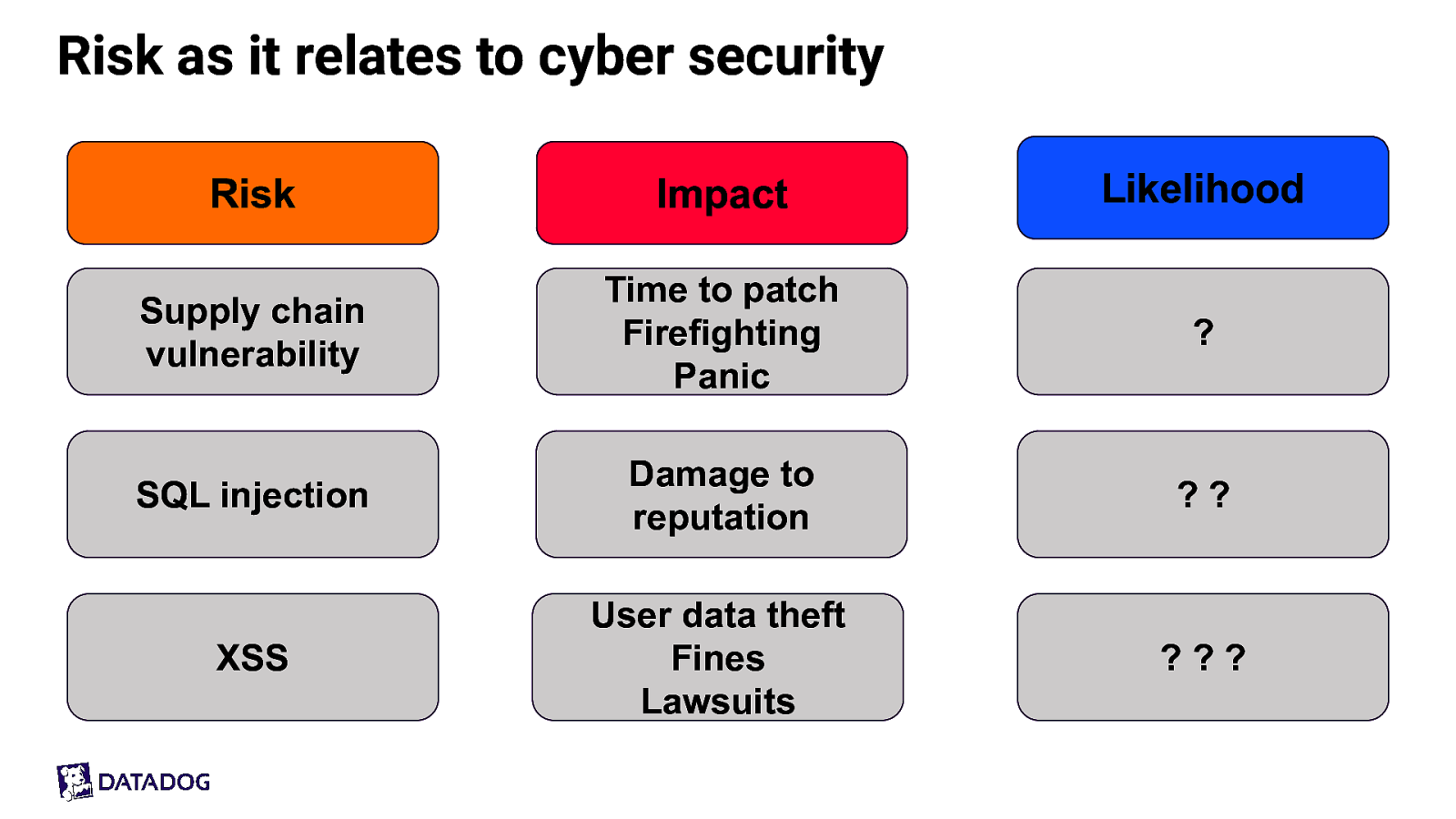
Risk as it relates to cyber security Risk Impact Likelihood Supply chain vulnerability Time to patch Firefighting Panic ? SQL injection Damage to reputation ?? XSS User data theft Fines Lawsuits ???
Slide 22
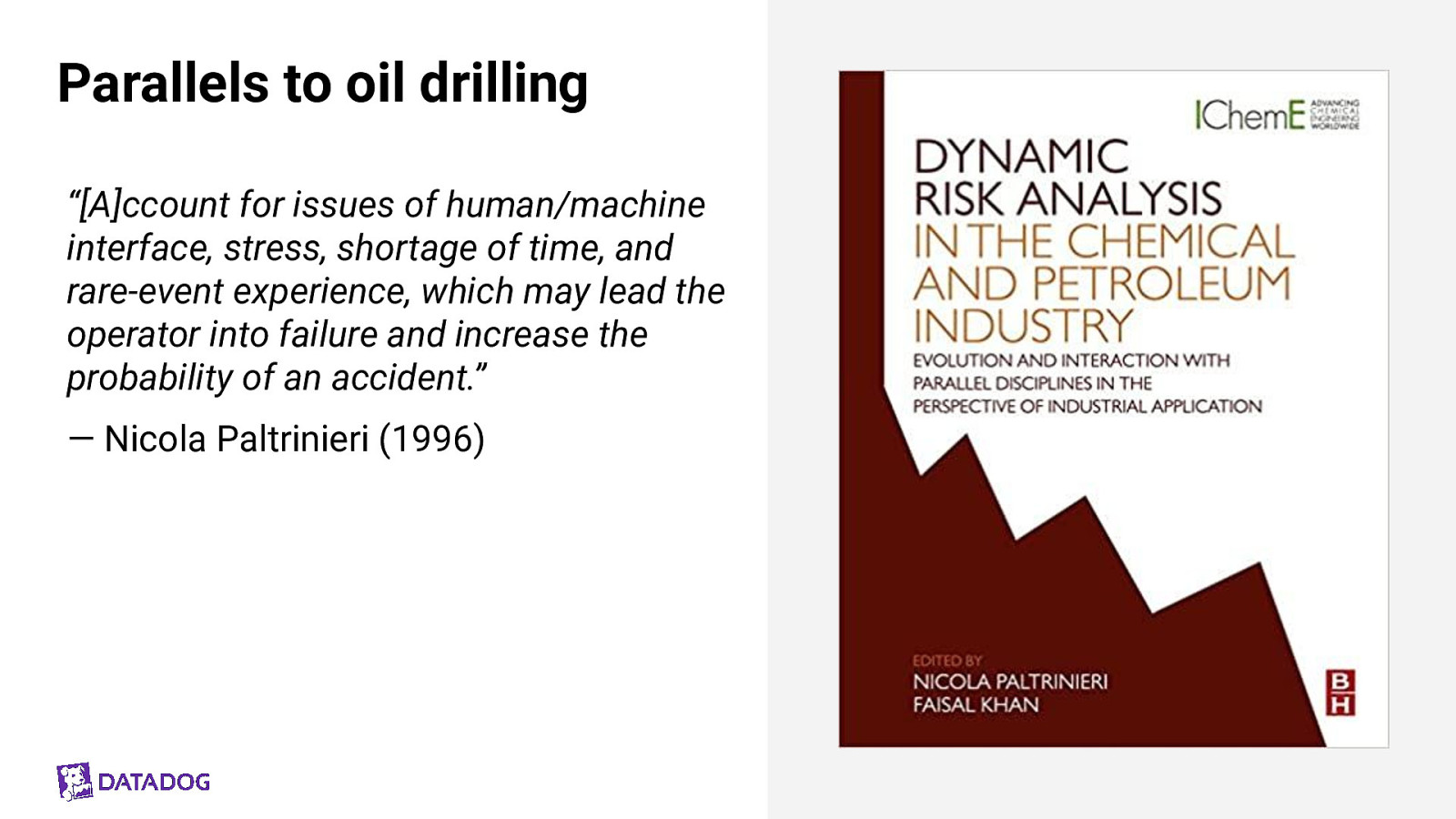
Parallels to oil drilling “[A]ccount for issues of human/machine interface, stress, shortage of time, and rare-event experience, which may lead the operator into failure and increase the probability of an accident.” — Nicola Paltrinieri (1996)
Slide 23
Examples of risk in the context of information technology
Slide 24
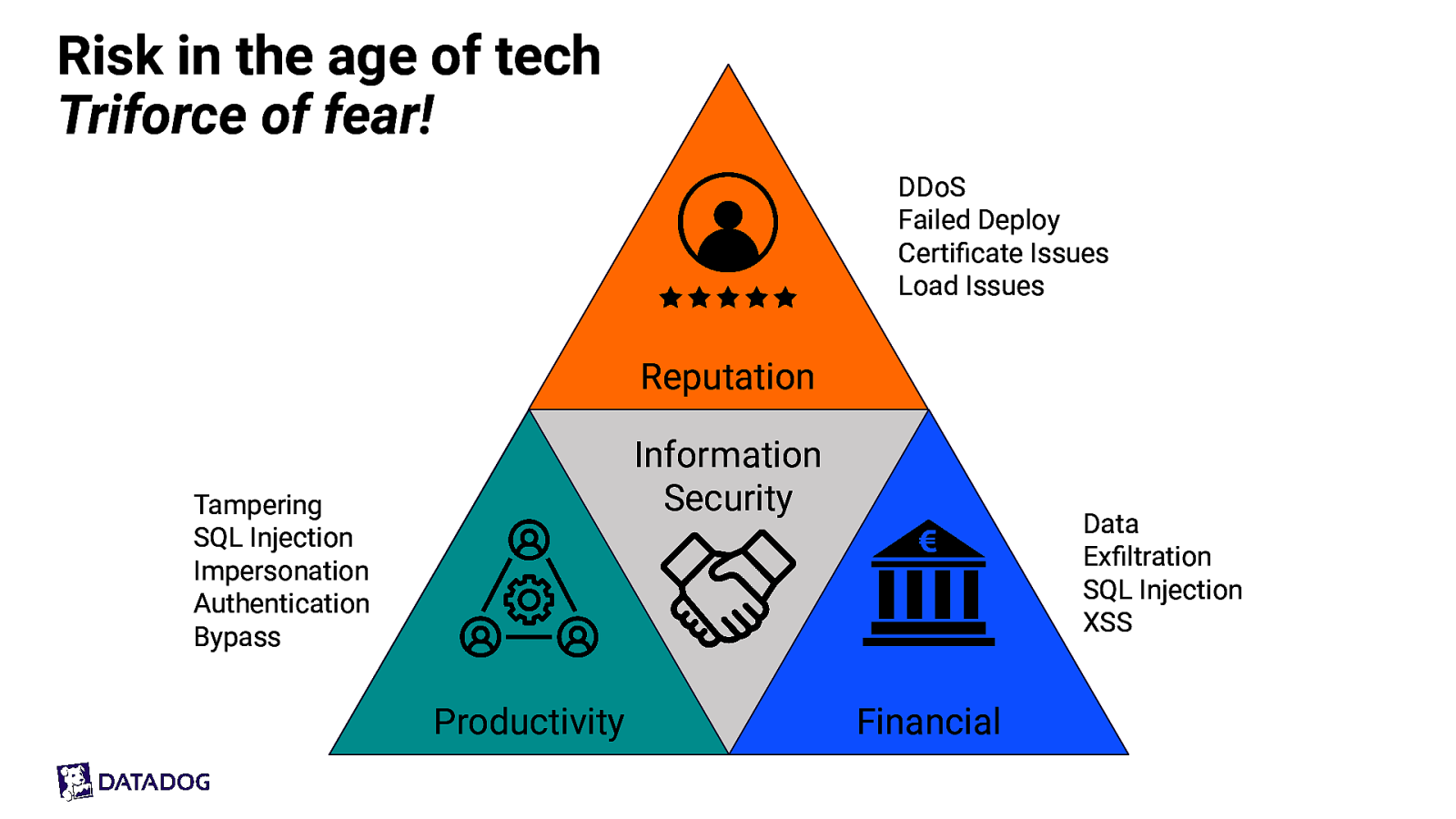
Risk in the age of tech Triforce of fear! DDoS Failed Deploy Certificate Issues Load Issues Reputation Information Security Tampering SQL Injection Impersonation Authentication Bypass Productivity Data Exfiltration SQL Injection XSS Financial
Slide 25
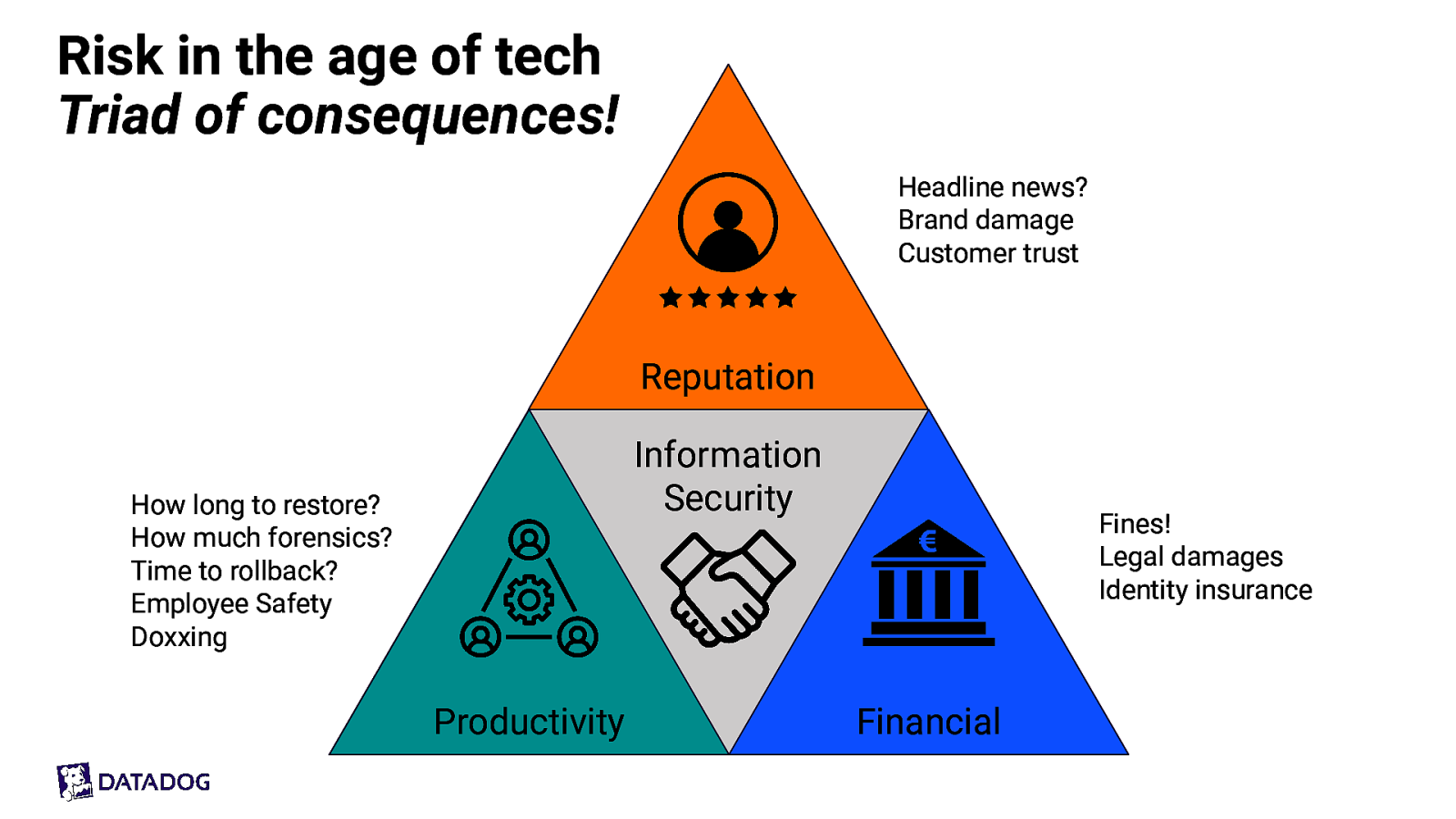
Risk in the age of tech Triad of consequences! Headline news? Brand damage Customer trust Reputation Information Security How long to restore? How much forensics? Time to rollback? Employee Safety Doxxing Productivity Fines! Legal damages Identity insurance Financial
Slide 26
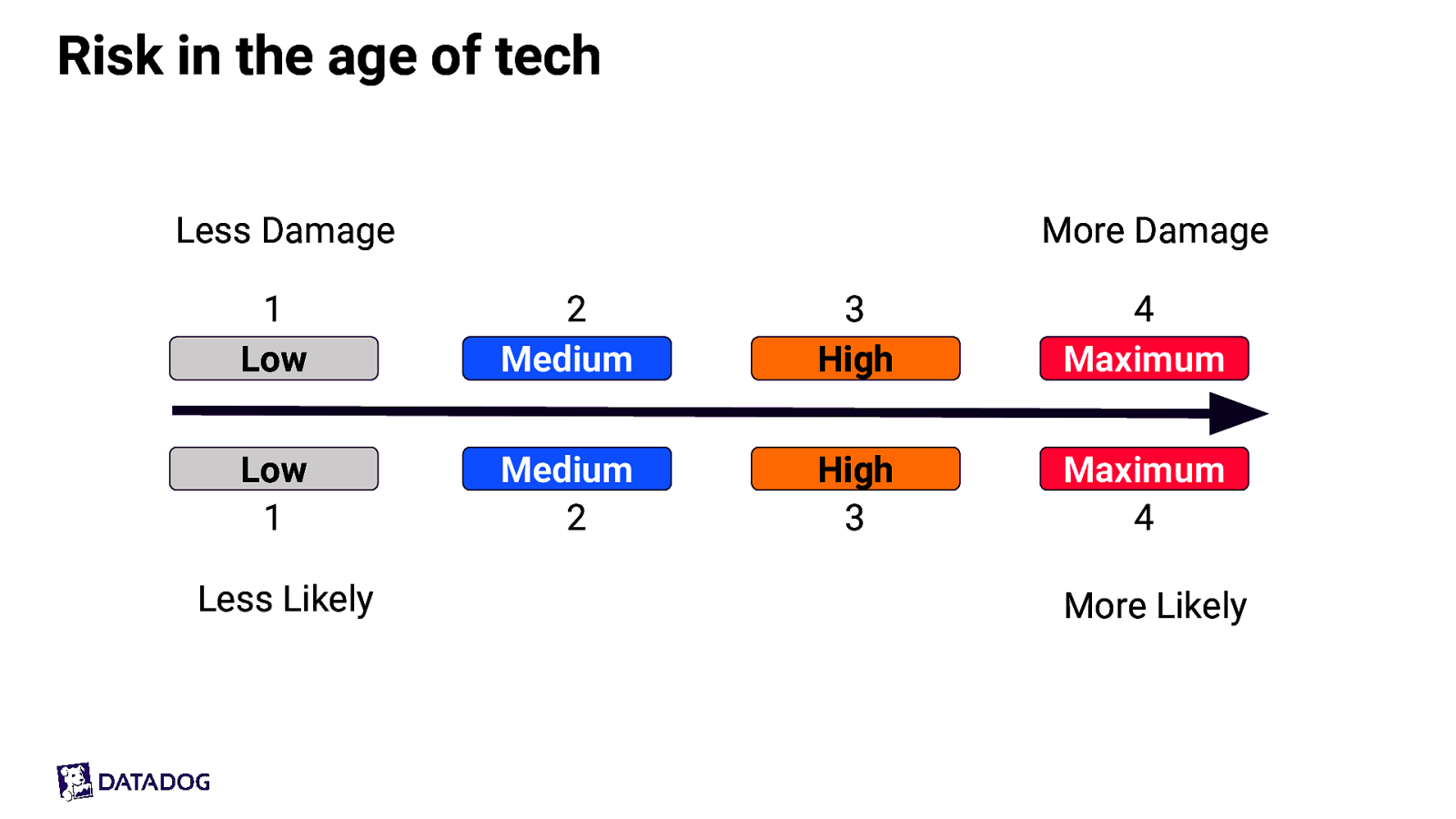
Risk in the age of tech Less Damage More Damage 1 Low 2 Medium 3 High 4 Maximum Low 1 Medium 2 High 3 Maximum 4 Less Likely More Likely
Slide 27
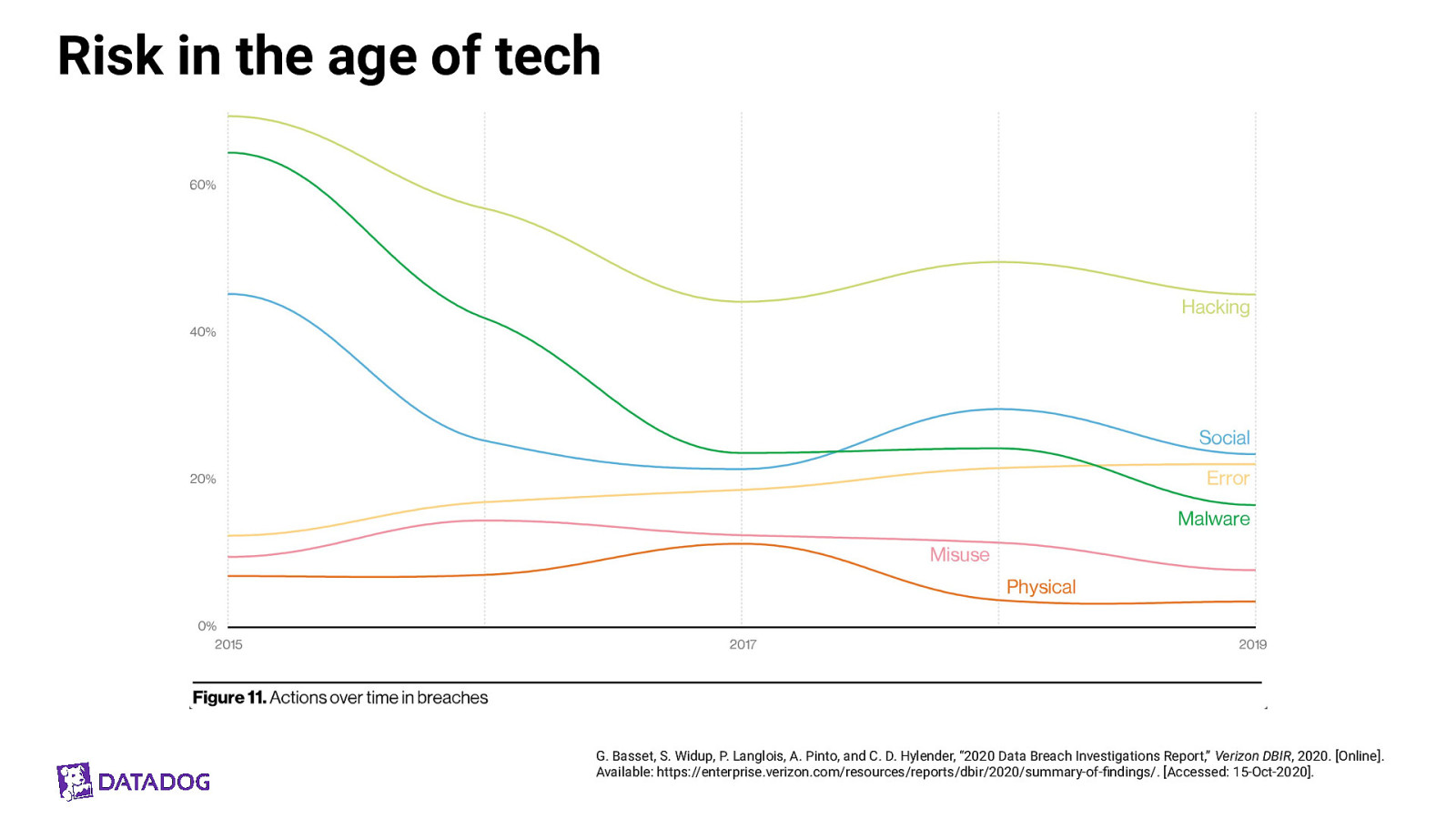
Risk in the age of tech G. Basset, S. Widup, P. Langlois, A. Pinto, and C. D. Hylender, “2020 Data Breach Investigations Report,” Verizon DBIR, 2020. [Online]. Available: https://enterprise.verizon.com/resources/reports/dbir/2020/summary-of-findings/. [Accessed: 15-Oct-2020].
Slide 28
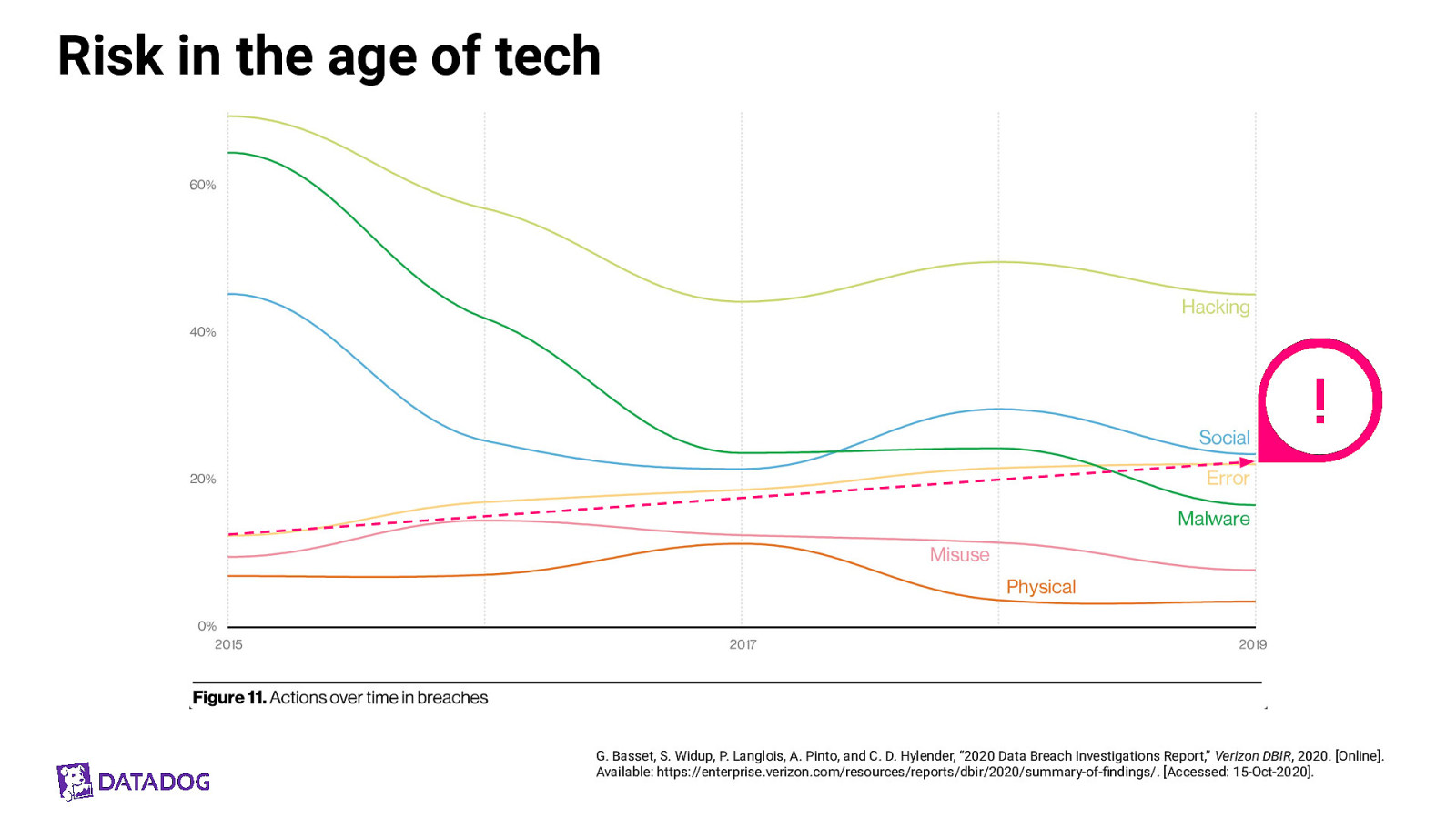
Risk in the age of tech G. Basset, S. Widup, P. Langlois, A. Pinto, and C. D. Hylender, “2020 Data Breach Investigations Report,” Verizon DBIR, 2020. [Online]. Available: https://enterprise.verizon.com/resources/reports/dbir/2020/summary-of-findings/. [Accessed: 15-Oct-2020].
Slide 29
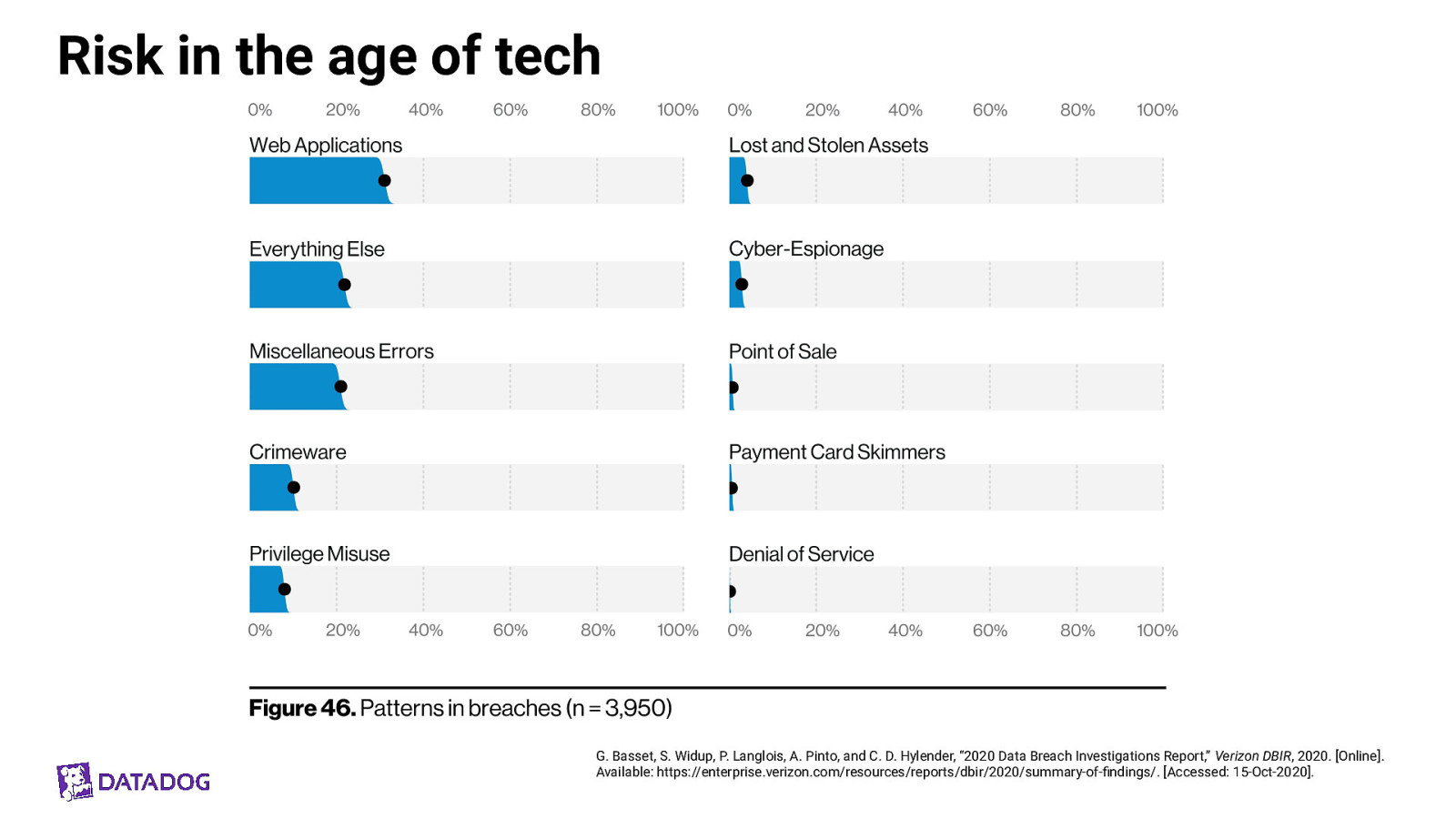
Risk in the age of tech G. Basset, S. Widup, P. Langlois, A. Pinto, and C. D. Hylender, “2020 Data Breach Investigations Report,” Verizon DBIR, 2020. [Online]. Available: https://enterprise.verizon.com/resources/reports/dbir/2020/summary-of-findings/. [Accessed: 15-Oct-2020].
Slide 30
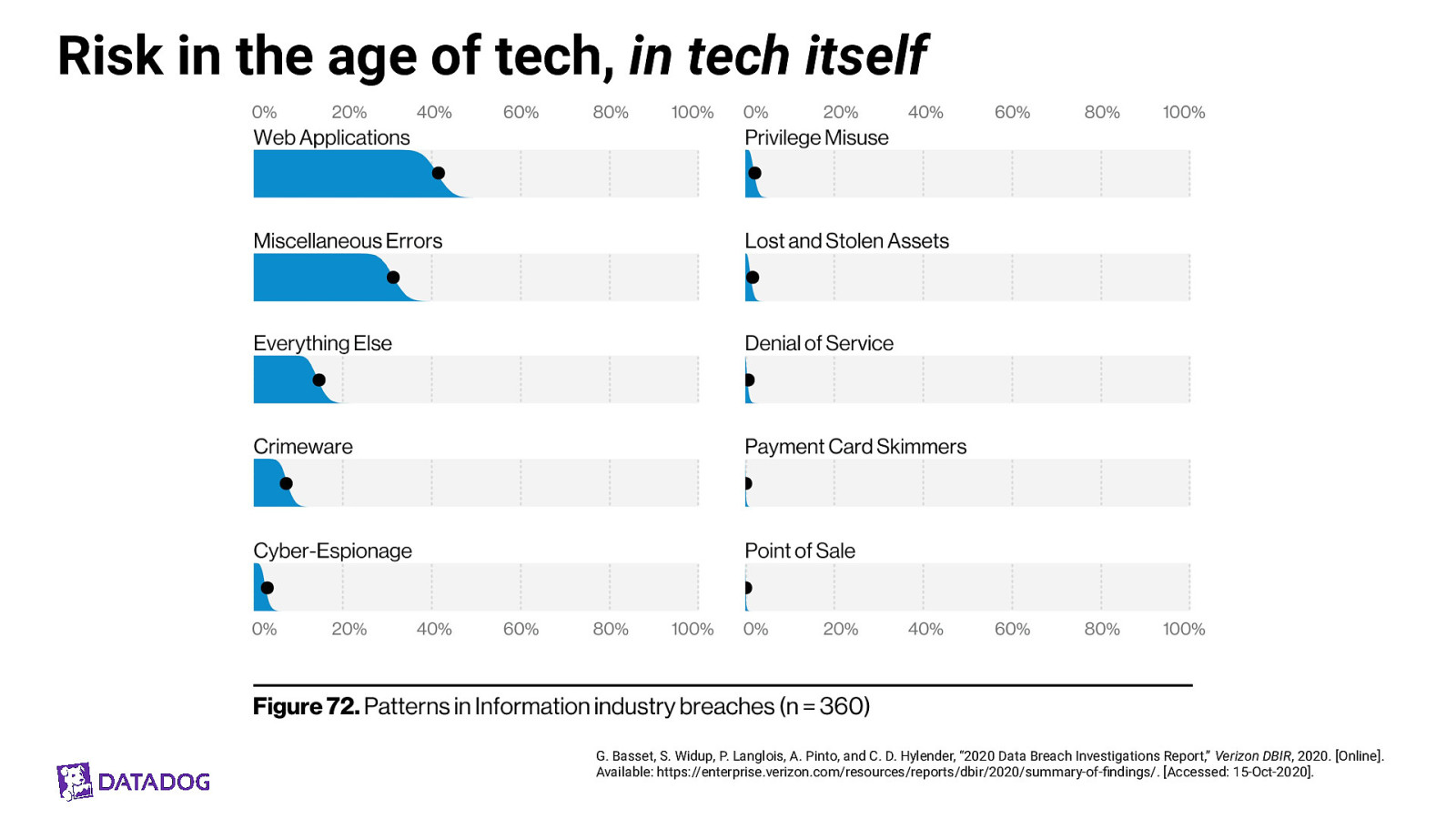
Risk in the age of tech, in tech itself G. Basset, S. Widup, P. Langlois, A. Pinto, and C. D. Hylender, “2020 Data Breach Investigations Report,” Verizon DBIR, 2020. [Online]. Available: https://enterprise.verizon.com/resources/reports/dbir/2020/summary-of-findings/. [Accessed: 15-Oct-2020].
Slide 31
Shifting-left in order to deal with specific risk
Slide 32
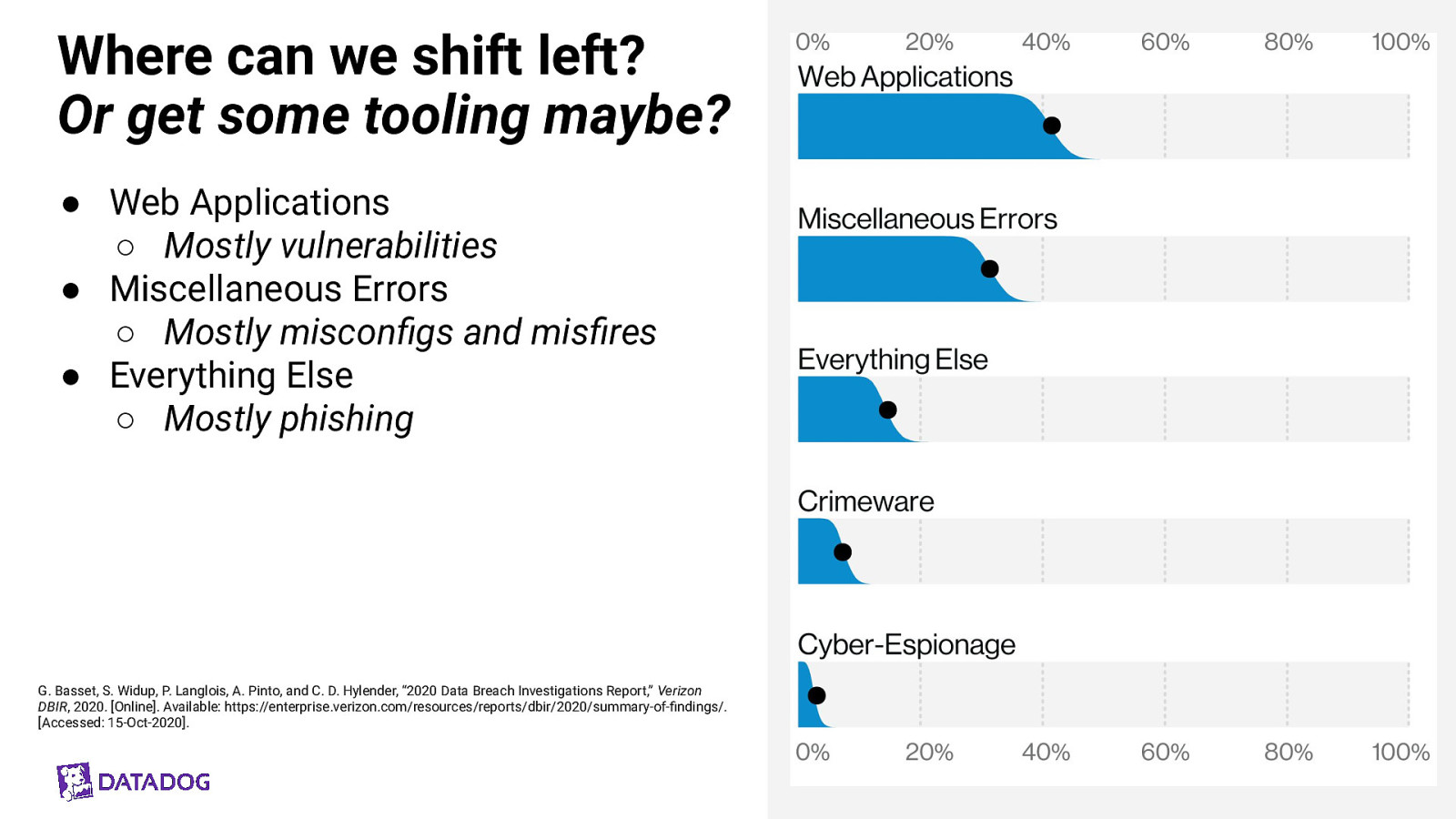
Where can we shift left? Or get some tooling maybe? ● Web Applications ○ Mostly vulnerabilities ● Miscellaneous Errors ○ Mostly misconfigs and misfires ● Everything Else ○ Mostly phishing G. Basset, S. Widup, P. Langlois, A. Pinto, and C. D. Hylender, “2020 Data Breach Investigations Report,” Verizon DBIR, 2020. [Online]. Available: https://enterprise.verizon.com/resources/reports/dbir/2020/summary-of-findings/. [Accessed: 15-Oct-2020].
Slide 33
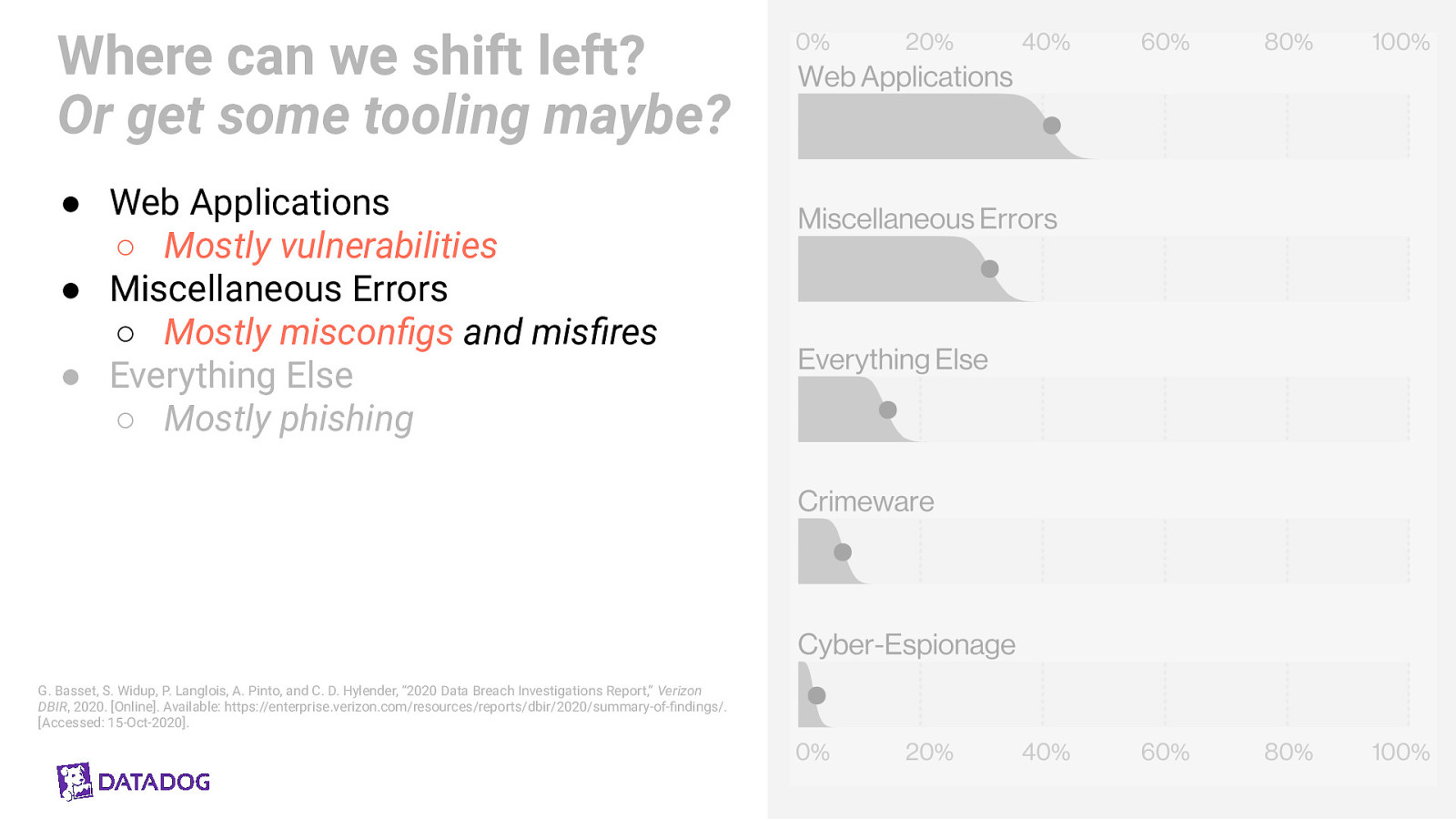
Where can we shift left? Or get some tooling maybe? ● Web Applications ○ Mostly vulnerabilities ● Miscellaneous Errors ○ Mostly misconfigs and misfires ● Everything Else ○ Mostly phishing G. Basset, S. Widup, P. Langlois, A. Pinto, and C. D. Hylender, “2020 Data Breach Investigations Report,” Verizon DBIR, 2020. [Online]. Available: https://enterprise.verizon.com/resources/reports/dbir/2020/summary-of-findings/. [Accessed: 15-Oct-2020].
Slide 34
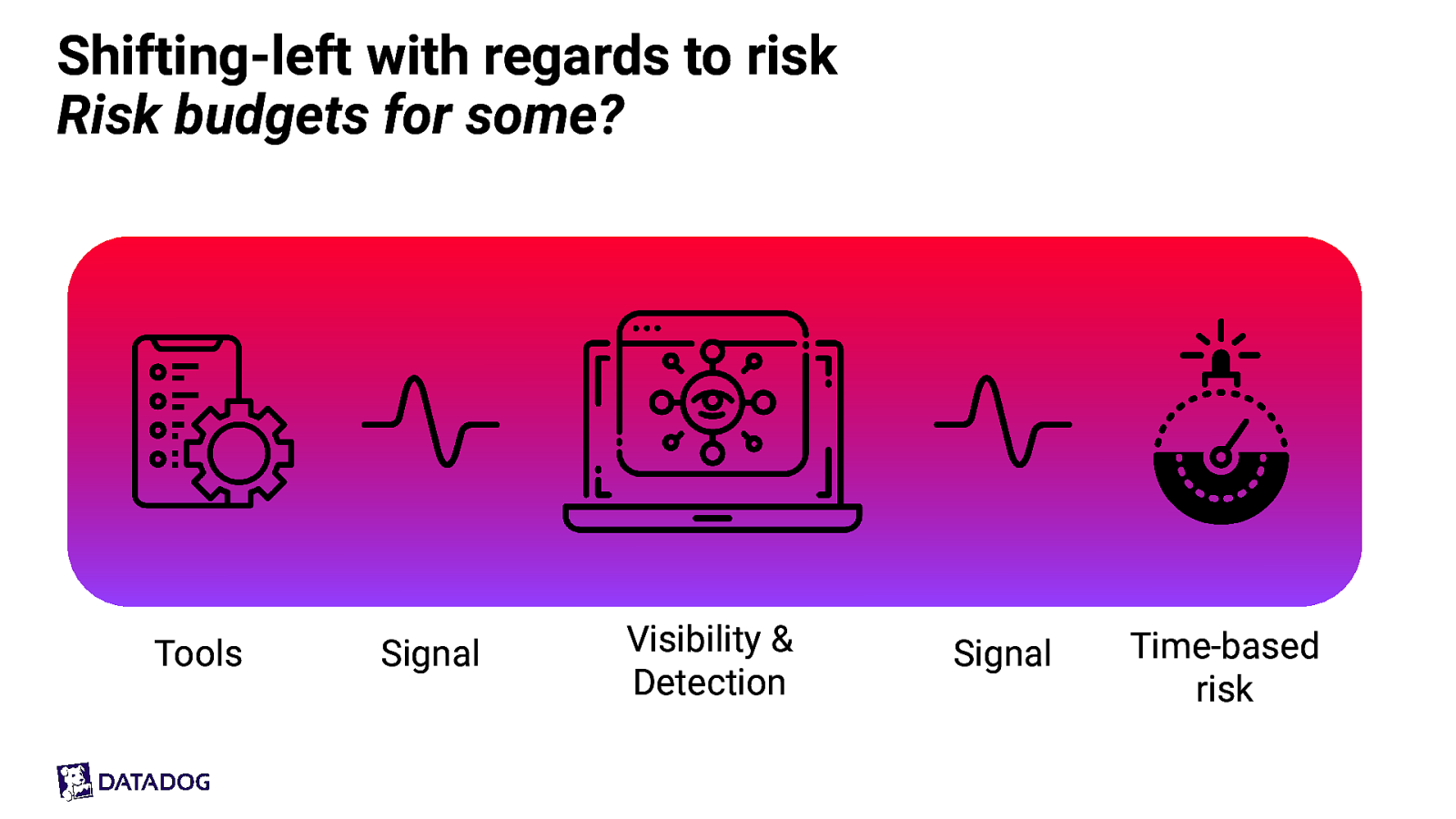
Shifting-left with regards to risk Risk budgets for some? Tools Signal Visibility & Detection Signal Time-based risk
Slide 35
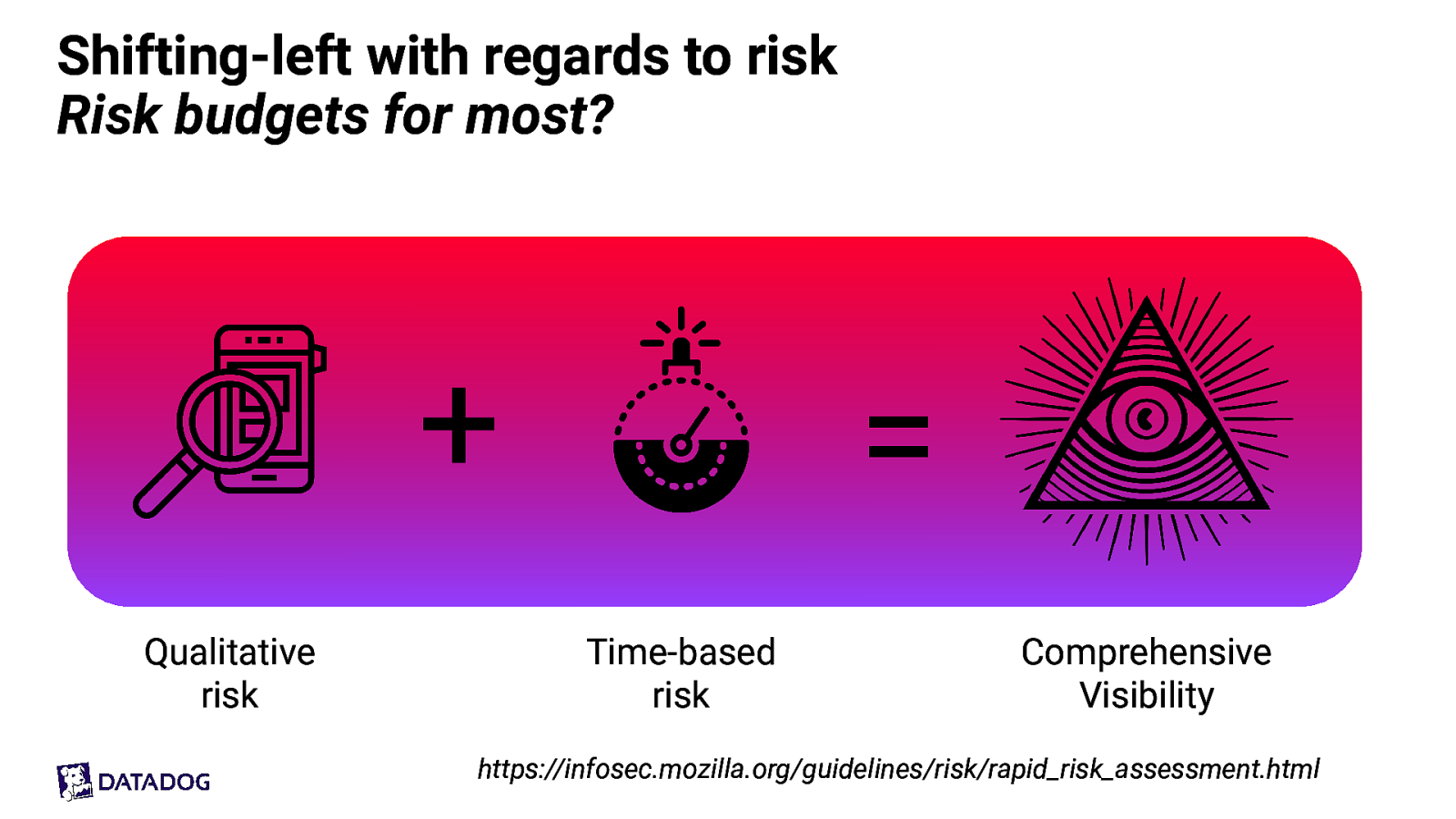
Shifting-left with regards to risk Risk budgets for most? Qualitative risk = Time-based risk Comprehensive Visibility https://infosec.mozilla.org/guidelines/risk/rapid_risk_assessment.html
Slide 36
Shifting left with regards to risk What is your risk budget based on?
Slide 37
Shifting left with regards to risk Base your budget on your data!
Slide 38

It’s demo time!
Slide 39
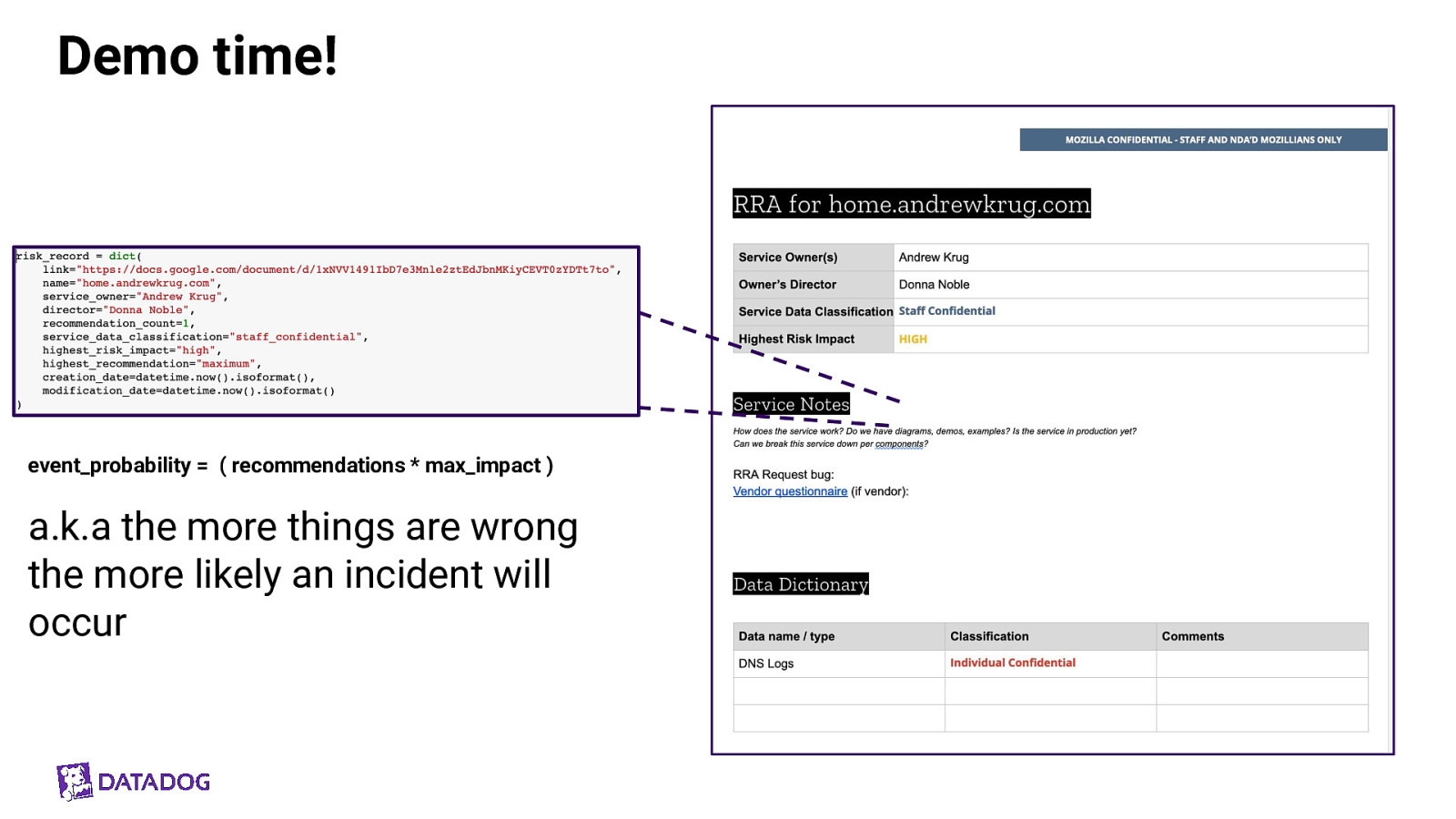
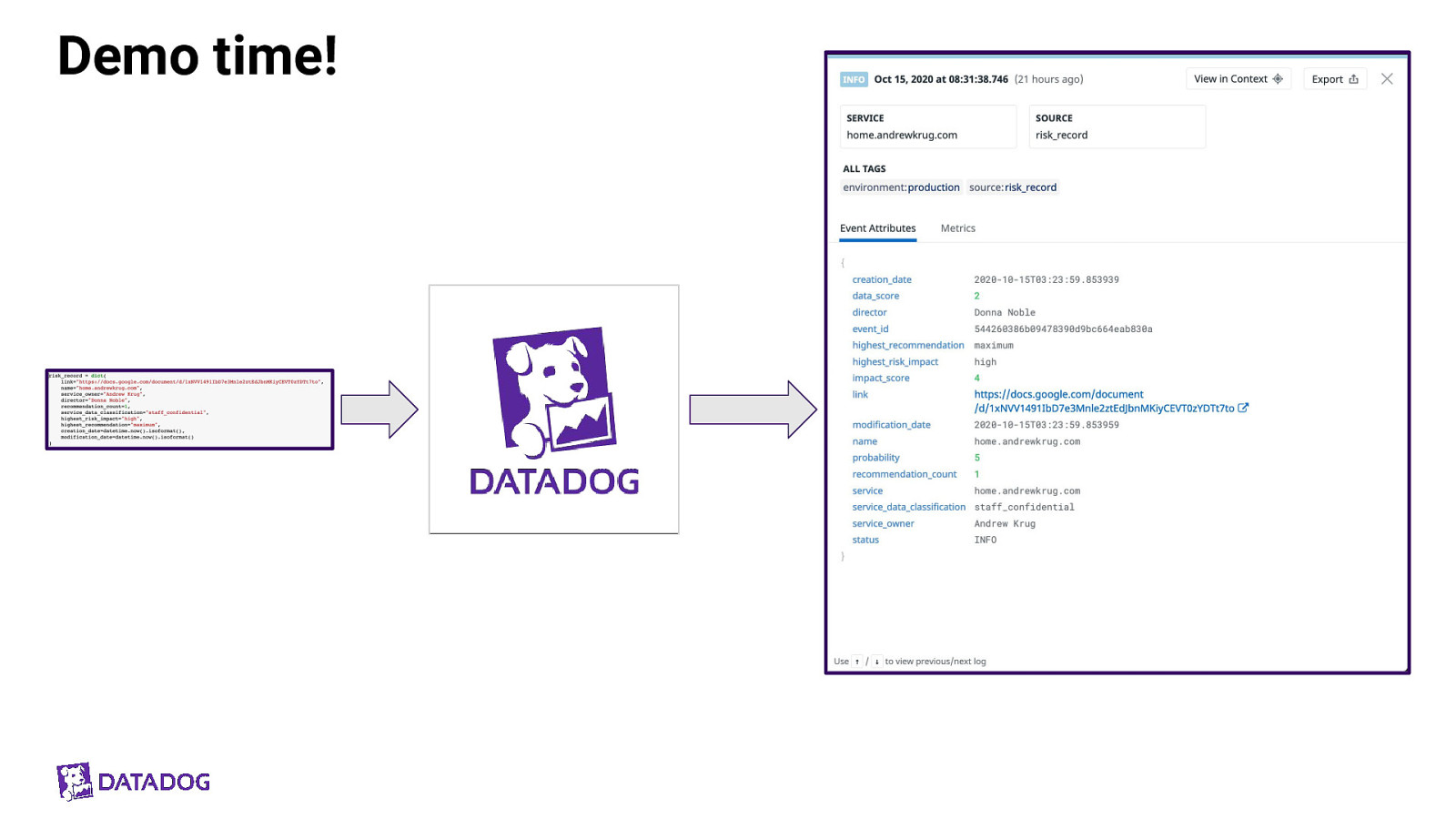
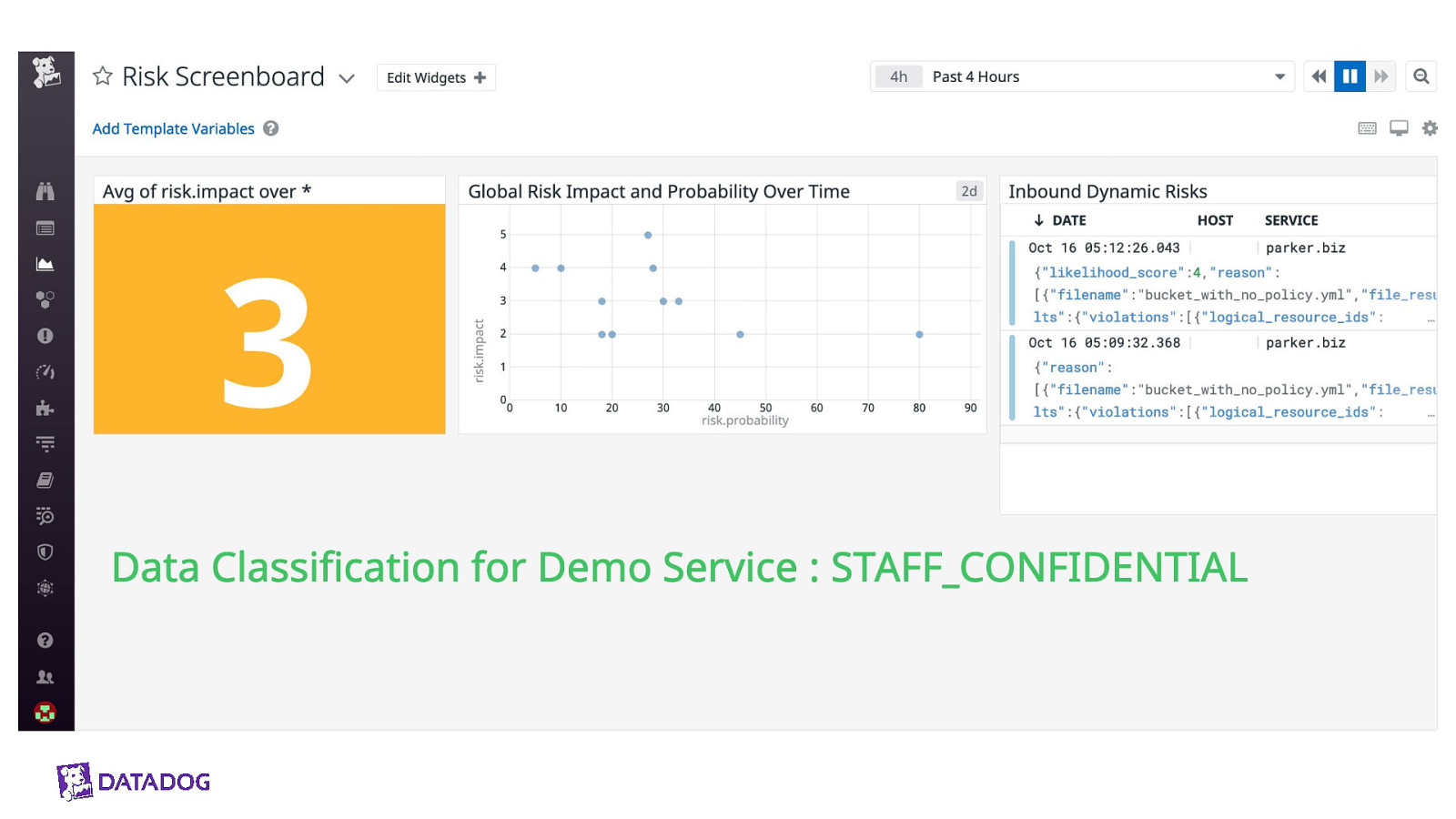
Demo time! event_probability = ( recommendations * max_impact ) a.k.a the more things are wrong the more likely an incident will occur
Slide 40
Demo time!
Slide 41
Demo time!
Slide 42
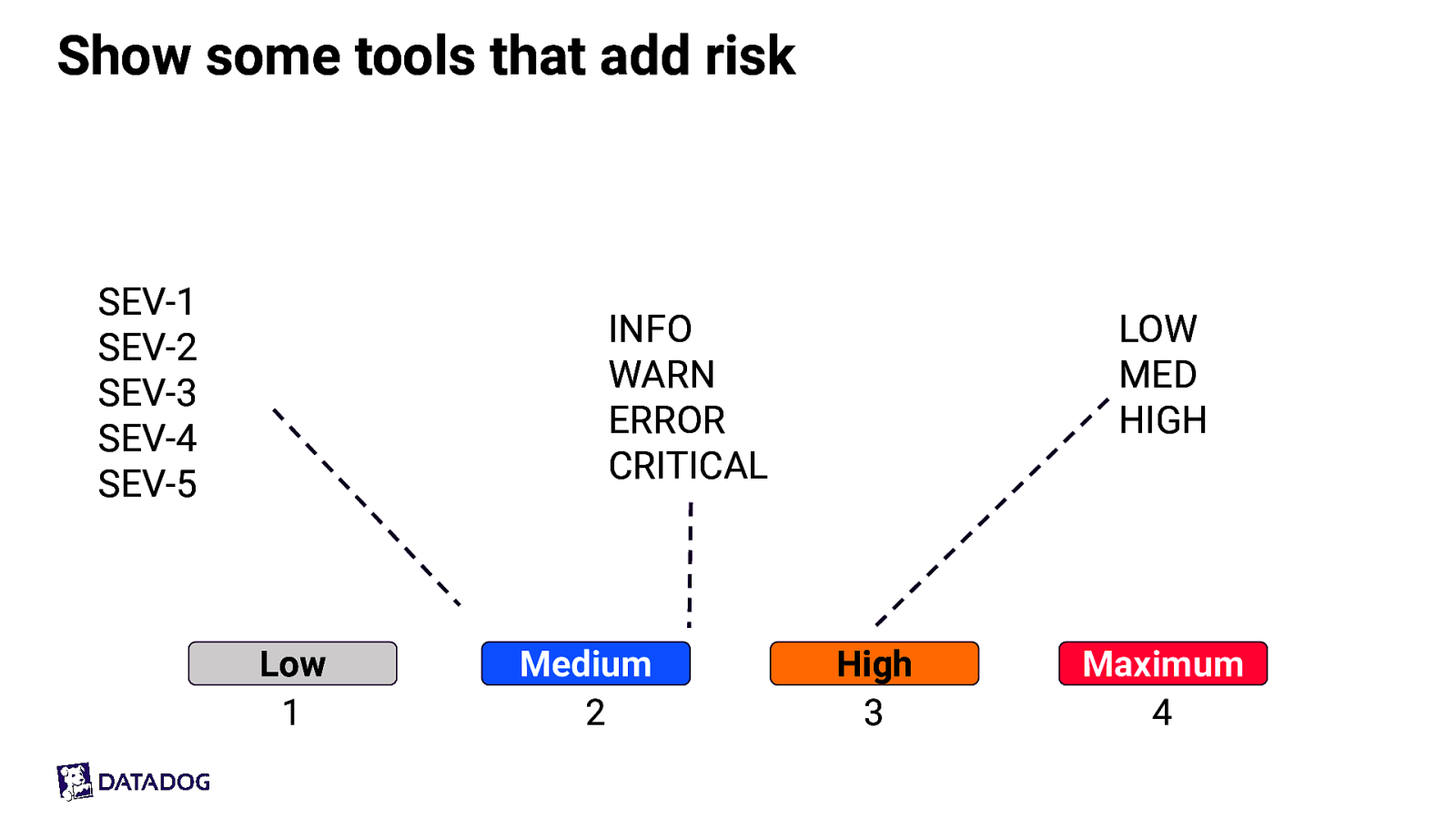
Show some tools that add risk SEV-1 SEV-2 SEV-3 SEV-4 SEV-5 INFO WARN ERROR CRITICAL Low 1 Medium 2 LOW MED HIGH High 3 Maximum 4
Slide 43

Example : CFN_Nag
Slide 44
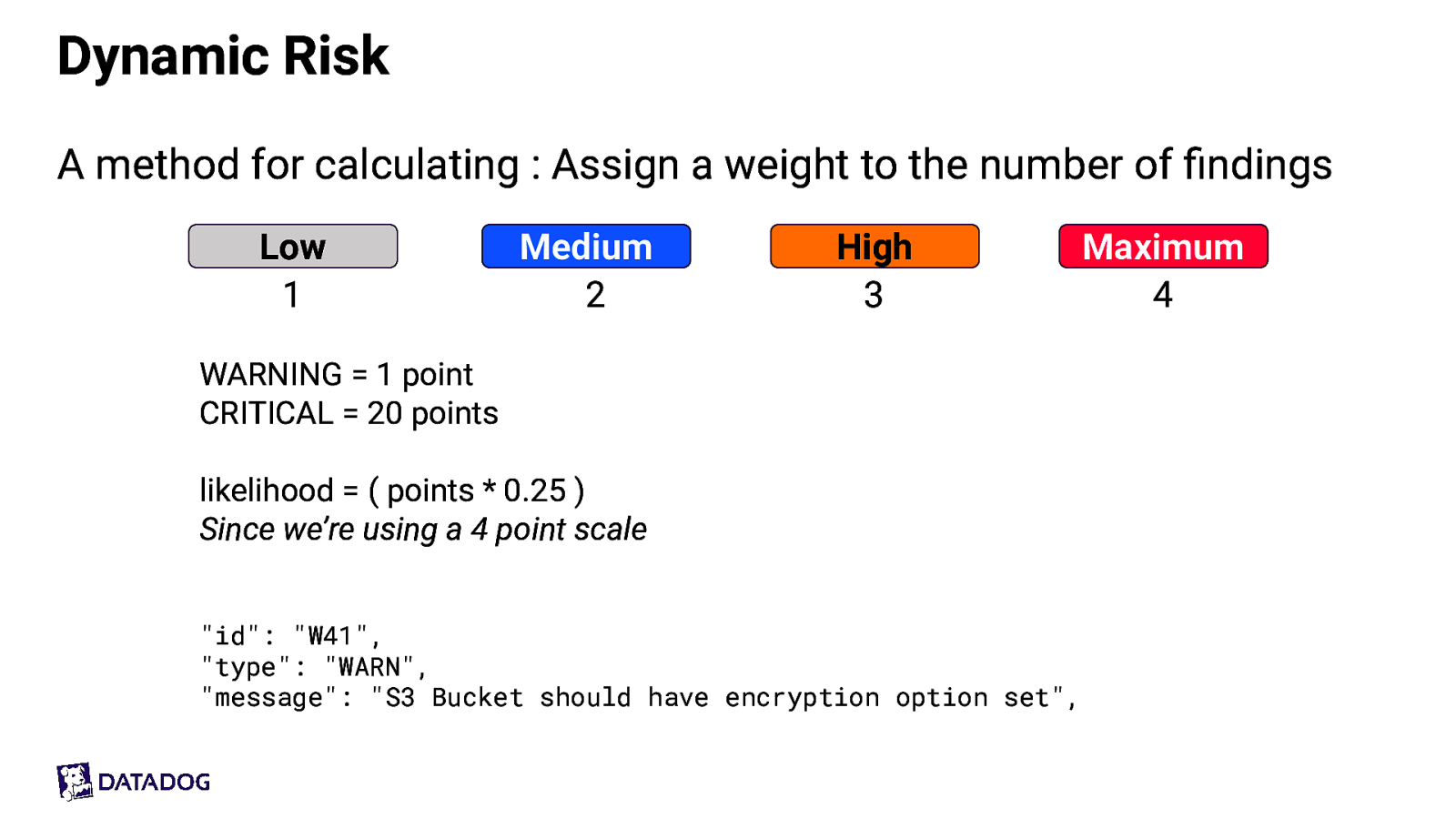
Dynamic Risk A method for calculating : Assign a weight to the number of findings Low 1 Medium 2 High 3 WARNING = 1 point CRITICAL = 20 points likelihood = ( points * 0.25 ) Since we’re using a 4 point scale “id”: “W41”, “type”: “WARN”, “message”: “S3 Bucket should have encryption option set”, Maximum 4
Slide 45
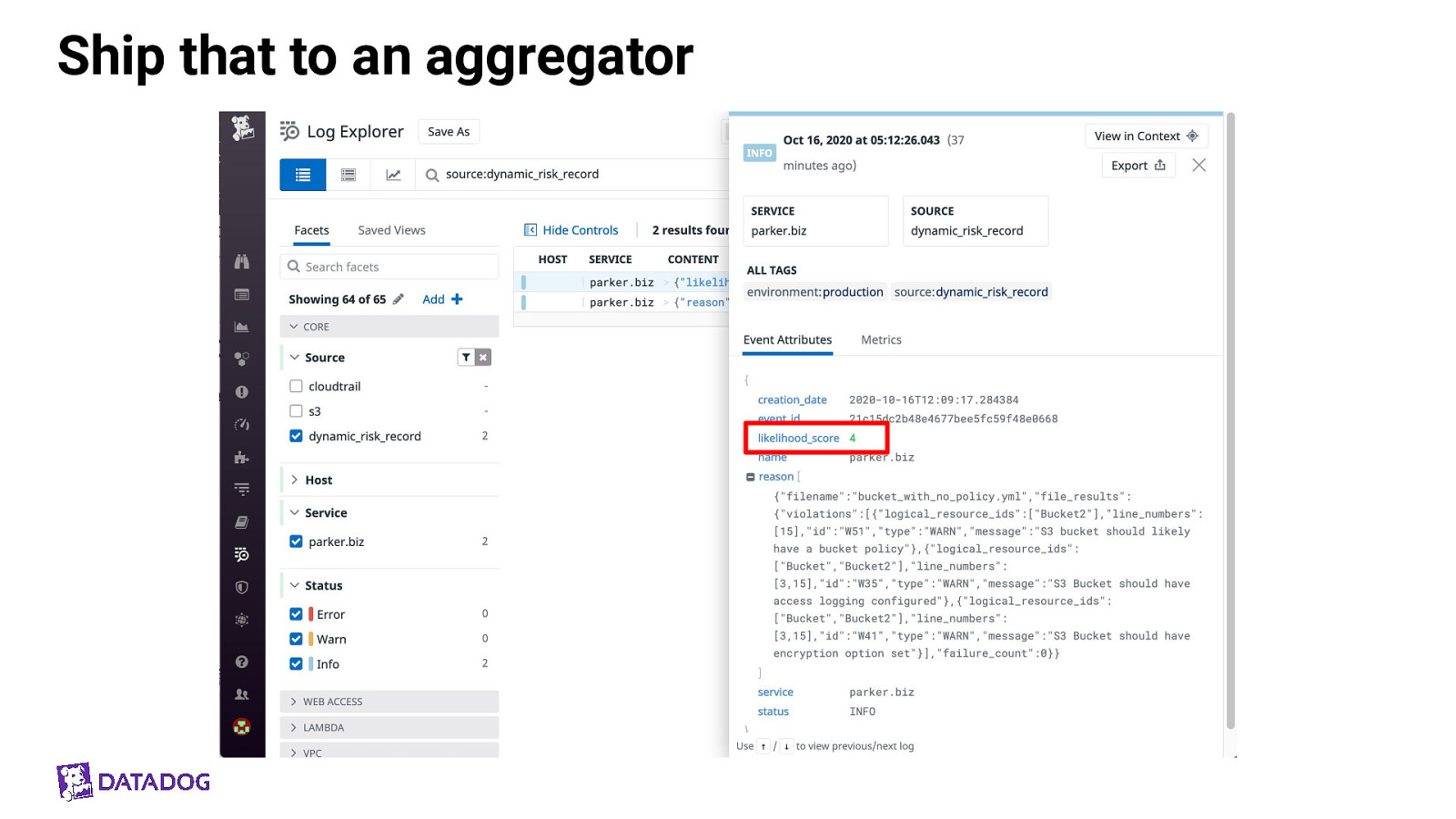
Ship that to an aggregator
Slide 46
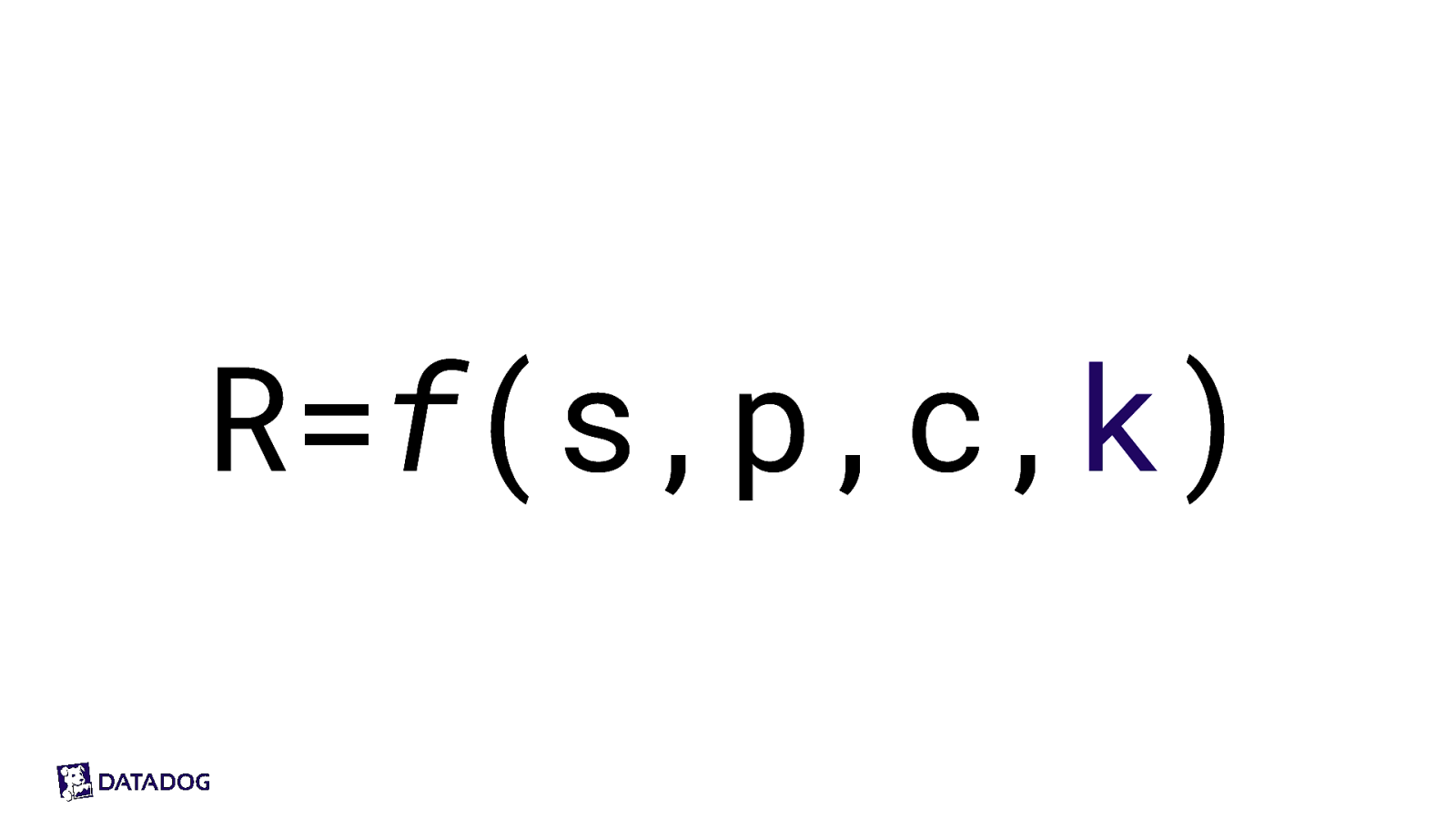
R=f(s,p,c,k)
Slide 47
Slide 48

So in summary…
Slide 49
In summary… a.k.a. the tl;dr – The best risk assessments incorporate qualitative and quantitative metrics – Your environment is already giving you risk signals – Risk is a tool that software development teams can add to their toolbox in order to help the business go fast and stay safe. – It’s not always wrong to accept SOME risk depending on your risk budget.
Slide 50
In summary… Keep the party going! https://infosec.mozilla.org/guidelines/risk/rapid_risk_assessment.html We’re going to have a free risk assessment training with one of the creators (@kangsterizer) of Mozilla RRA. Email or follow us on Twitter for more info! [email protected] // @andrewkrug [email protected] // @phrawzty